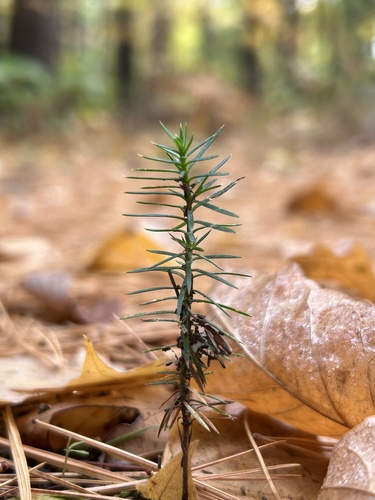
Dwarf Juniper
Juniperus communis 'Point Saint George'
Care
part shade
low
Medium; Prefers somewhat acidic forest soils.
5–33ft tall , 8–8ft wide
Mar-May
Evergreen
Resistant
Friendly
Berries used as spice; seeds crushed for flavoring
Supports up to 53 butterfly and moth species in Mediterranean California
Point Saint George area of Del Norte County in far northwestern California, below 1000 ft elevation, in coastal scrub.
Care Guide
Planting
Plant your Dwarf Juniper in partial shade with medium-draining soil that's somewhat acidic - if your Bay Area soil is alkaline, amend it with sulfur or use a peat-based mix. Space it where it has room to spread, since this cultivar grows as a low, spreading shrub. The best planting time is fall or early spring. Make sure water can drain away freely; junipers rot in soggy soil.
After Planting
Water weekly for the first summer to establish your plant, then taper back to a maximum of 3 times per month once established - it's drought-tolerant once it settles in. The #1 mistake is overwatering: this plant comes from high-elevation forests and prefers dry conditions, so if you're watering more than every 10 days in summer, you're probably overdoing it. Prune only if needed to maintain shape; this is an evergreen that requires minimal intervention. Your juniper will thrive year-round in the Bay Area and needs no winter protection.
Wildlife Supported
Birds

Specializes on juniper seeds; primary food source across seasons

Critical fall migration fuel and winter survival food; peak consumption Sep-Dec

Winter resident; seeds important winter food source

Important winter food; fruits consumed during migration and overwintering

Important pre-migration food source; builds fat reserves Aug-Oct

Important for fall migration staging and winter survival in mild climates
Insects

Specialist juniper feeder; colonies on foliage and shoots

Larvae feed on juniper foliage; key larval host plant

Larvae mine juniper shoots and foliage; significant juniper specialist

Visits juniper pollen and flowers during early season

Specialist juniper pollinator; spring emergence coincides with juniper flowering
Mammals

Consumes juniper fruits opportunistically; winter food source