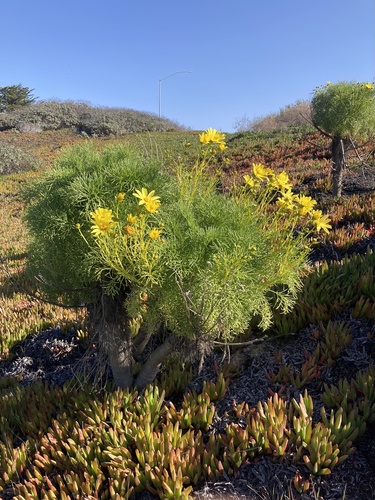
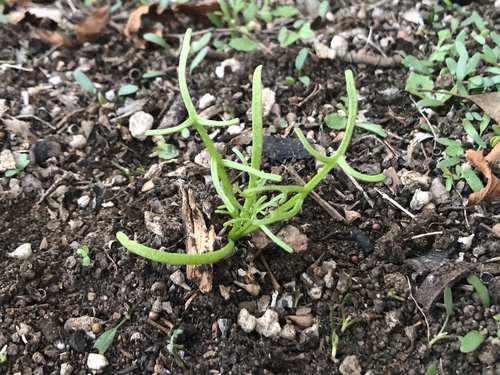
Giant Coreopsis
Leptosyne gigantea
Care
full sun
very low
Fast, Medium; Prefers sand or sandstone.
3–8ft tall , 2–4ft wide
Jan-Dec
Deciduous
Resistant
Prized
Santa Barbara and San Luis Obispo County coastal bluffs and scrub, below 500 ft elevation, endemic to California coast.
Care Guide
Planting
Plant Giant Coreopsis in full sun with fast-draining soil - it prefers sandy or sandstone-based soil and won't tolerate heavy clay or poor drainage. Space it where it has room to develop its characteristic tall trunk (3–8 feet), since it only branches occasionally. Fall or early winter is the best planting window for Bay Area gardens. This coastal California native is cold-hardy to 25°F, so it will thrive in most local microclimates.
After Planting
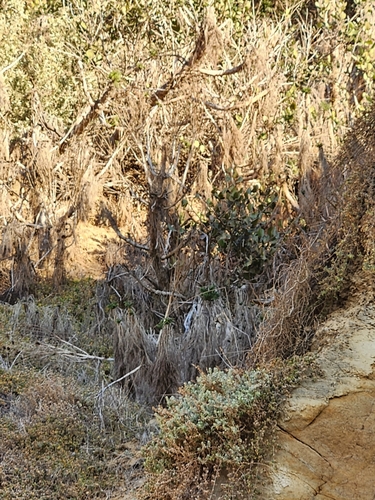
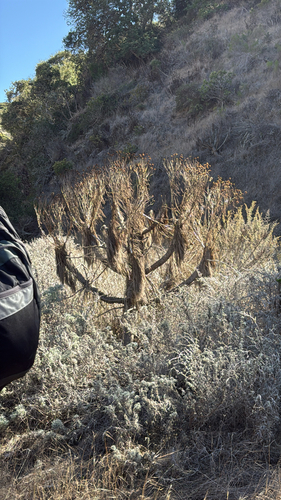
Water regularly the first year to establish roots, but once established, Giant Coreopsis needs almost no supplemental water - never irrigate during summer once it's settled in. Expect the plant to go summer deciduous, dropping its leaves and leaving a bare trunk; this is normal and not a sign of stress. The main mistake Bay Area gardeners make is overwatering, especially in summer when the plant naturally wants to rest. Prune only as needed to shape the plant; the data doesn't specify timing, so wait until you see how yours grows before cutting.
Endangered & Threatened Species Supported
California endemic; specialist on Opuntia cacti
Wildlife Supported
Birds

Fall and winter seed consumption; important food source during migration and overwintering
Insects

Primary pollinator and nectar forager; critical for colony provisioning

Larval host plant and adult nectar source; supports multiple generations

Primary nectar and pollen forager during blooming season

Multiple species forage on flowers; important pollinators

Early season pollen source for spring-emerging mining bees

Specialist pollen forager during flowering period

Larvae feed on plant tissues; multi-generational use

Spring and early summer pollen collection for larval provisions
+5 more species