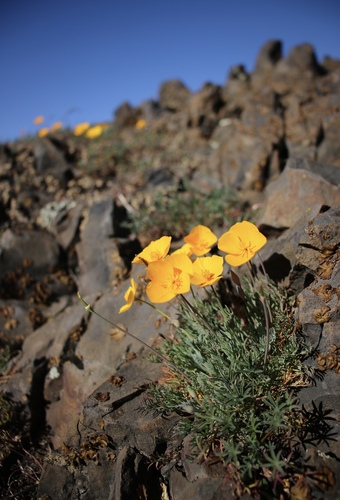
Frying Pans
Eschscholzia lobbii
Care
full sun
very low
Fast, Medium, Slow; Adaptable.
0–0ft tall , 0–0ft wide
Mar-May
Friendly
Prized
Southern California coastal sage scrub and chaparral from Santa Barbara County to San Diego County, below 2000 ft elevation.
Care Guide
Planting
Plant Frying Pans in full sun with fast-draining soil - it's adaptable to different soil types but won't tolerate wet feet. Sow seeds directly in spring (March through May is the flowering window, so plant a few weeks before) and space them out to account for their 4–6 inch height at maturity. This annual wildflower is at home in Central Valley gardens and shines best planted in a meadow-like patch with other spring annuals rather than as a solo specimen.
After Planting
Once established, Frying Pans is a set-it-and-forget-it plant - water no more than twice a month during summer and expect virtually no supplemental water once the rainy season arrives. As a cool-season annual, it will naturally fade as temperatures heat up, so don't expect it to persist into summer or beyond its spring bloom. The biggest mistake is overwatering; this is a wildflower that evolved to handle California's dry seasons, so err on the side of neglect rather than kindness with the hose.
Endangered & Threatened Species Supported
Listed under ESA; California Species of Special Concern
California Species of Special Concern
Wildlife Supported
Insects

Host plant for caterpillar development in spring

Early season nectar source during limited floral availability

Spring and early summer nectar foraging

Early spring foraging for colony establishment
Birds

Post-breeding season seed consumption

Winter ground foraging for seeds

Winter grassland habitat use