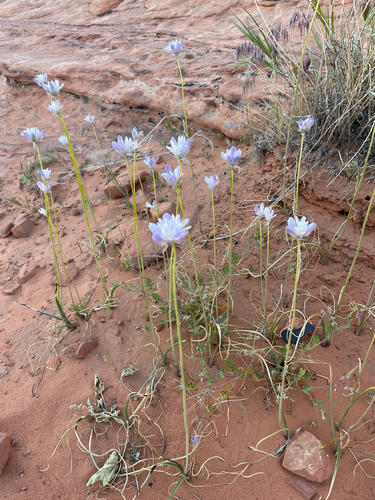
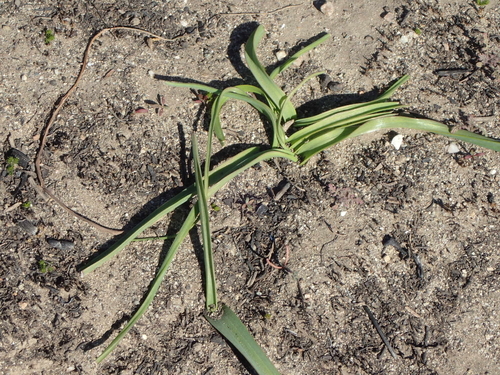
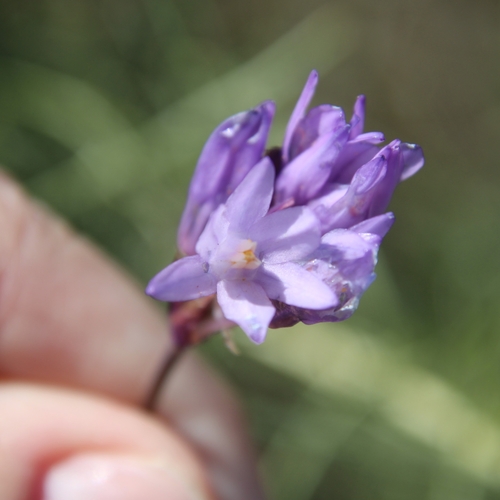
Blue Dips
Dichelostemma capitatum
Care
full sun
very low
Fast; sandy, coarse-grained or other fast draining soils.
1–2ft tall , 0–1ft wide
Mar-May
Deciduous
Resistant
Friendly
Prized
Corms roasted or boiled; traditional California Indigenous food.
Widespread throughout central and southern California grasslands, oak savannas, and chaparral below 3000 ft elevation.
Care Guide
Planting
Plant Blue Dips in full sun in a spot with fast-draining soil - sandy or coarse-grained soil is ideal. They bloom March through May, so plant in fall or early winter to establish before flowering. Space them in drifts for impact, as these are small bulbs (1-2 feet tall). They're native to the Bay Area and surrounding regions, so they'll appreciate conditions similar to their natural habitat.
After Planting
Water moderately during the growing season and keep the soil moist through summer. Once established, Blue Dips need very little water - they're drought-tolerant and prefer drier conditions, so hold back on watering after bloom ends and the foliage yellows. These are deciduous bulbs that go dormant in summer; this is completely normal and not a sign something is wrong. The biggest mistake is overwatering or planting in heavy clay soil where water sits around the bulbs, which causes rot.
Endangered & Threatened Species Supported
Federal Threatened; California Endangered; Species of Special Concern
California Species of Special Concern
Wildlife Supported
Birds

Early spring blooms provide critical nectar during breeding season establishment
Insects

Queens foraging for pollen and nectar during colony establishment in spring

Larval host plant; eggs laid on shoots in spring for caterpillar development

Early season pollen source for queen foraging and worker provisioning

Spring pollen host plant for nest provisioning

Spring adult foraging on early blooms

Spring adult nectar source during emergence period

Early spring pollen and nectar source during hive establishment

Spring adult foraging on early season blooms
+4 more species
Arachnids

Preys on insects attracted to blooms; uses plant structure for hunting