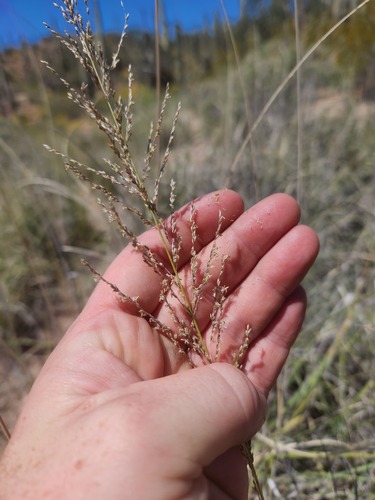
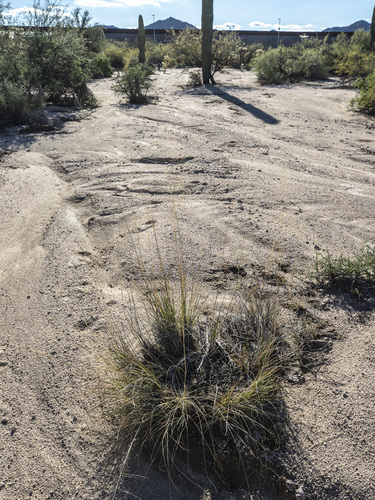
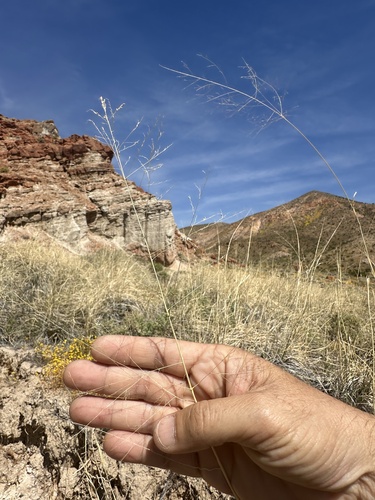
Alkali Sacaton
Sporobolus airoides
Care
full sun
very low
Medium; Tolerates a variety of soils. Tolerates sodic soil..
3–4ft tall , 2–2ft wide
Jun-Aug
Deciduous
Resistant
Friendly
Alkaline meadows and desert areas of inland California from Kern County northward, typically 2000-5000 ft elevation.
Care Guide
Planting
Plant Alkali Sacaton in full sun with medium drainage soil - it's forgiving about soil type and actually thrives in alkaline or sodic soils that many plants reject. Space according to your desired mature size (3–4 feet tall) and plant in spring or summer when the plant is actively growing. This grass tolerates a wide range of elevations and conditions from coastal to desert, so it's adaptable to most Bay Area microclimates.
After Planting
Water twice monthly during the first summer to establish, then cut back to very low water once established - this is a drought-tolerant native that prefers moist but not wet conditions. Let the medium green leaves fall off naturally in winter; this is normal deciduous behavior, not a problem. The showy yellow flowers and seedheads appear mid-summer through fall and need no deadheading. The #1 mistake is overwatering: resist the urge to treat it like a traditional lawn grass, and remember it can't handle regular heavy foot traffic.
Wildlife Supported
Birds

Primary seed consumer in arid alkali meadows where this grass is dominant perennial species

Important winter forage in alkali scrub habitats of California deserts and interior valleys
Insects

Larvae feed on alkali sacaton foliage in spring months
Dipteran larvae develop within alkali sacaton tissues

Specialist leafminer larvae develop within alkali sacaton leaves
Arachnids
Web-building spider utilizes alkali sacaton for web construction and arthropod foraging habitat
Mammals

Spring green foliage provides critical moisture and nutrition during reproduction season

Seeds harvested and cached during autumn seed maturation period