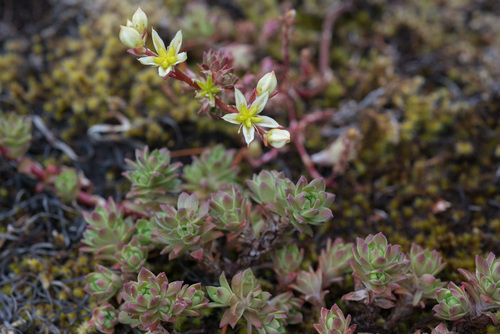
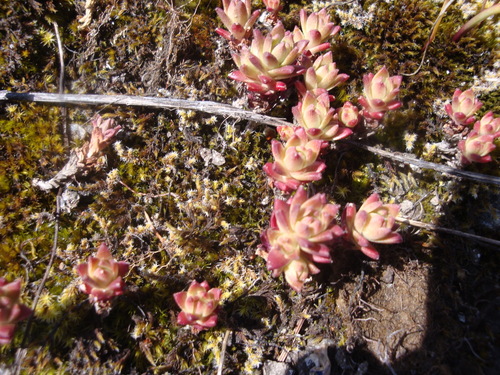
Wormleaf Stonecrop
Sedum stenopetalum
Care
part shade
low
Fast
0–0ft tall
Mar-Aug
Resistant
Friendly
Prized
Succulent leaves eaten raw or cooked; traditional Indigenous food.
High elevation rocky areas throughout the Sierra Nevada and mountains of northeastern California above 5000 ft, extending to Oregon and eastward.
Care Guide
Planting
Plant wormleaf stonecrop in fast-draining soil - it evolved on rocky cliffs and talus slopes, so heavy clay will rot the roots. It tolerates partial shade but will be happiest with at least some direct sun in the Bay Area's mild climate. Space plants about 8–12 inches apart since they form mats; spring is the ideal planting window to let them establish before summer.
After Planting
Water weekly during your first summer to help the plant establish, then cut back drastically - this is a low-water succulent that needs almost nothing once settled in. The biggest mistake Bay Area gardeners make is overwatering; if the soil stays wet, root rot will kill it faster than any pest or disease. Wormleaf stonecrop blooms from March through August with yellow flowers, requires minimal pruning, and is evergreen, so it will stay green year-round in your garden.
Visit Calscape for more information about Wormleaf Stonecrop
Endangered & Threatened Species Supported
California Endangered Species Act listing
California listed as Threatened
Wildlife Supported
Insects

Larval development on succulent foliage in montane meadows

Larval foodplant in alpine and subalpine meadow habitats

Larval foodplant for this alpine specialist butterfly

Early season pollen source for spring-active mining bee

Early season nectar and pollen source for colony establishment

Early spring larval development on low-growing succulents

Spring foraging resource for this California alpine species

Nectar and pollen foraging during flowering period