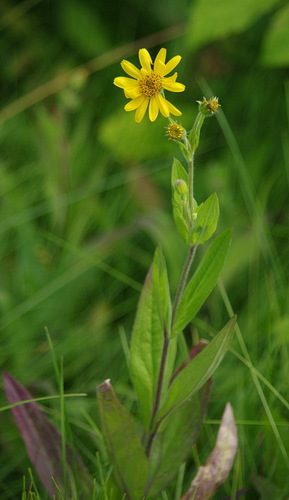
Chamisso arnica
Arnica chamissonis
Care
part shade
low
Prefers sandy or loamy soils. Does not grow well in clay soils.
1–3ft tall
Mar-Aug
Deciduous
Resistant
Friendly
Prized
High elevation meadows and wet areas throughout the Sierra Nevada and Cascade Range above 5000 ft, extending to Oregon and eastward.
Care Guide
Planting
Plant Chamisso arnica in part shade with well-draining sandy or loamy soil - it will struggle in clay, so amend heavy soil before planting. Choose a location that stays consistently moist, mimicking the moist meadows where it naturally grows in the Sierra Nevada. Plant in spring to give it the full growing season to establish before winter dormancy.
After Planting
Water weekly through the first summer and into early fall to keep soil consistently moist as the plant establishes. Once it's growing vigorously in year two, you can reduce watering to moderate levels, though it prefers not to dry out completely. This is a short-lived perennial that's deciduous, so expect it to die back in winter - don't mistake dormancy for death. The #1 mistake is planting it in clay soil or allowing it to dry out during establishment; this plant wants moisture and good drainage, not drought.
Wildlife Supported
Birds

Critical winter food resource in alpine and subalpine regions

Important seed source during fall migration and winter staging
Insects

Specialist fruit fly larva developing in arnica seedheads late summer to fall
Specialized monophagous moth larva feeding on arnica flowers and developing seeds
Fly larva mining arnica leaves throughout growing season

Grazing on arnica foliage during summer growing season in grassland/meadow habitats

Alpine butterfly utilizing flowers in subalpine meadows July-August

Subalpine meadow butterfly utilizing flowers mid-late summer