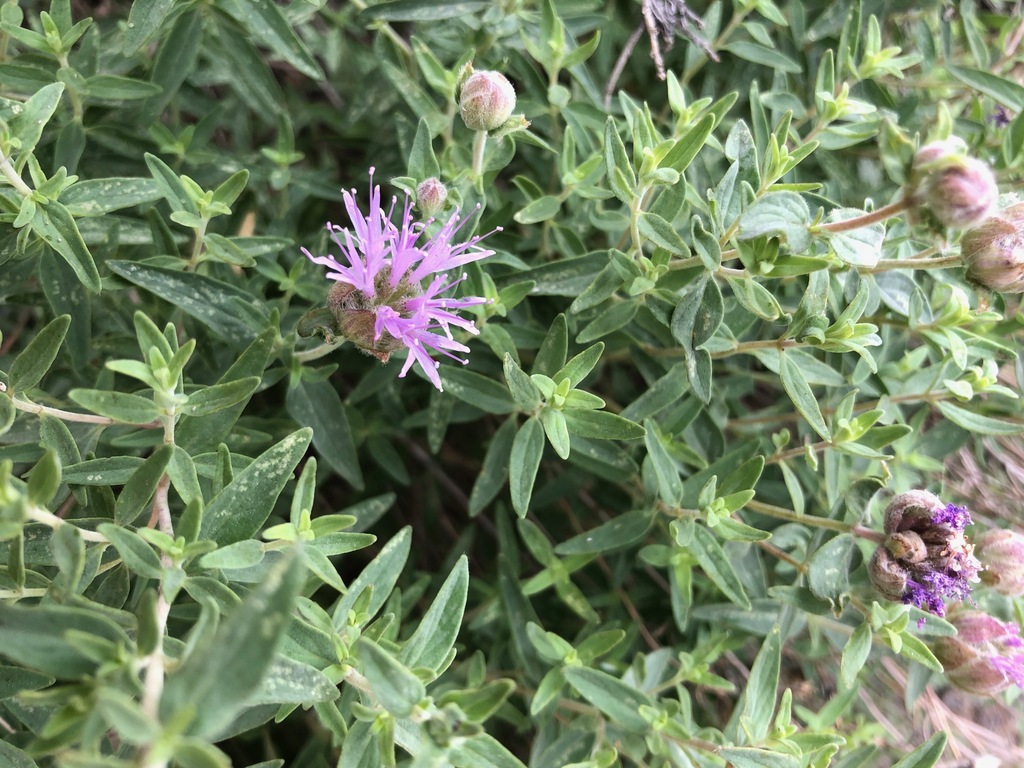
Mountain Coyote Mint
Monardella odoratissima
Care
full sun, part shade
low
0–1ft tall
Jun-Aug
Resistant
Friendly
Yes
Prized
Leaves and flowers used fresh or dried in tea or as culinary seasoning
Dry slopes and chaparral of the Sierra Nevada and mountains of central and northern California, 2000-7000 ft elevation, extending to Oregon
Care Guide
Planting
Plant your mountain coyote mint in full sun to part shade with well-draining soil - this is a plant adapted to mountain forests and sagebrush country, so it won't tolerate soggy conditions. Space plants about 1 to 2 feet apart to allow room for their upright to sprawling growth habit. Spring is your best planting window in the Bay Area to give the plant time to establish before summer.
After Planting
Water weekly during your plant's first summer to help it establish, then transition to low water once it's settled in - think of it as a mountain plant that's used to living lean. In late fall or winter, prune back your plant to encourage bushier growth and remove any dead wood. Deadhead spent flowers throughout the blooming season (June through August) to keep flowering going strong. The most common mistake is overwatering: this plant evolved in dry mountain scrub, so too much water will kill it faster than neglect.
Visit Calscape for more information about Mountain Coyote Mint
Endangered & Threatened Species Supported
California Endangered Species Act listing
California Species of Special Concern; monarch populations declining
California Species of Special Concern
Wildlife Supported
Insects
Larval host plant; multiple generations per year on Monardella species
Peak foraging June-August during colony establishment and growth
Larval host plant; caterpillar feeding March-May before pupation
Early spring forager; important for spring colony establishment
Spring emergence and nesting; critical early-season pollen source
Peak foraging June-September for nest provisioning
Early spring larval host; caterpillars present March-April
Northbound migrants April-May; critical refueling nectar
+6 more species
Birds
Year-round resident in California; critical nectar source for breeding season (Dec-Jun)