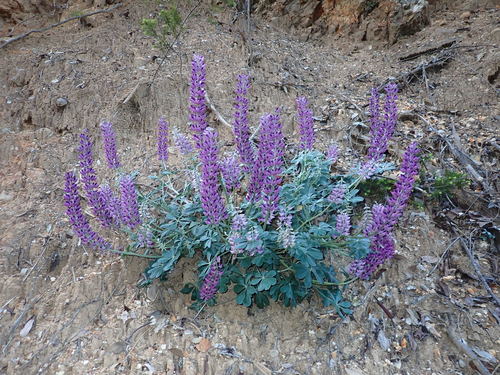
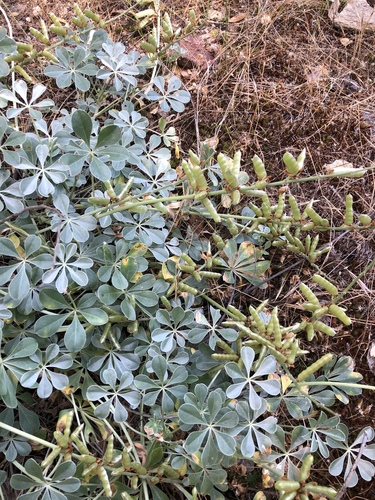
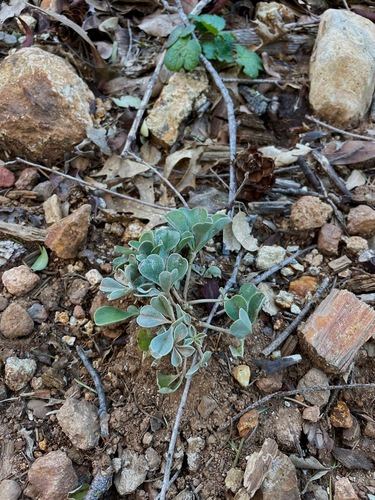
Cobb Mountain Lupine
Lupinus sericatus
Care
full sun
moderate
Fast; Tolerates a variety of soils as long as adequate drainage is provided.
0–1ft tall
Mar-May
Resistant
Friendly
Prized
Supports up to 74 butterfly and moth species in Mediterranean California
Chaparral of Sonoma and Lake Counties (Cobb Mountain area), 2500-4500 ft elevation
Care Guide
Planting
Plant your Cobb Mountain Lupine in full sun with fast-draining soil - this is non-negotiable, as poor drainage is where most plantings fail. Space it about 12–18 inches from other plants, since it reaches roughly half a meter tall. Spring is your best planting window (March through May, when it blooms). This lupine tolerates a variety of soil types as long as drainage is excellent, so amend heavy clay with compost or perlite before planting.
After Planting
Water moderately through your first summer to establish the plant, tapering off as fall approaches. Once established, this is a fairly low-maintenance perennial that doesn't require much fussing - just ensure it never sits in wet soil. The plant is deer resistant, so you won't need to protect it from browsing. Expect it to bloom in spring (March–May) and treat it as a perennial; the data doesn't specify pruning needs, so let it grow naturally unless you see dead wood to remove.
Visit Calscape for more information about Cobb Mountain Lupine
Endangered & Threatened Species Supported
Brush rabbit is a Species of Special Concern
Wildlife Supported
Insects
Specialist larval host plant for lupine skipper caterpillars

Early season nectar source for queen establishment and colony founding

Nectar source during spring emergence and breeding

Early season butterfly nectar resource

Spring foraging for hive provisioning

Pollen foraging during colony growth phase
Birds

Fall seed consumption during dispersal period
Mammals

Spring browse of new growth and flowers

Spring and early summer herbivory on new foliage