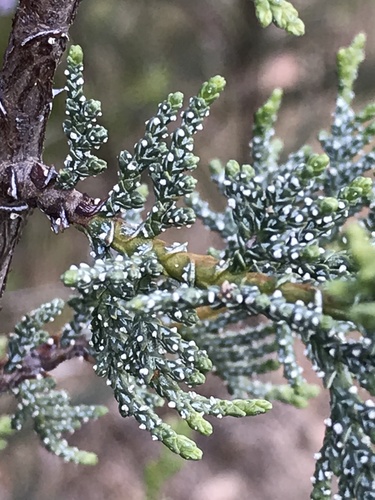
Macnab Cypress
Hesperocyparis macnabiana
Care
full sun, part shade
very low
Fast, Medium, Slow; Tolerates sand and clay often with a rocky substrate.
10–39ft tall
Evergreen
Resistant
Chaparral and oak woodlands of Lake, Napa, and Sonoma Counties in the inner Coast Ranges, 2000-4000 ft elevation
Care Guide
Planting
Plant your Macnab Cypress in full sun with fast-draining soil - it evolved in chaparral and rocky foothill soils, so drainage matters more than fertility. It tolerates sand, clay, and rocky substrates, so don't amend heavily; just make sure water doesn't pool around the base. Space according to your desired mature size (10–39 feet, often wider than tall), and plant in fall or early spring to establish before summer heat.
After Planting
Water very lightly once established - this is a native adapted to dry chaparral, so overwatering is the #1 killer. In year one, water sparingly during the first summer to help roots establish, then back off significantly as it matures. This is an evergreen that doesn't need pruning to thrive, though you can shape it lightly if needed. Expect slow to moderate growth and a spreading, often wider-than-tall form; deer will leave it alone.
Endangered & Threatened Species Supported
Listed under California Endangered Species Act
Wildlife Supported
Birds

Uses dense cypress foliage for roosting and nesting; particularly important in winter
Forages for insects on cypress bark; uses trees for shelter and roosting
Insects
Larvae feed on cypress foliage during warm months; species endemic to Sierra Nevada cypress stands

Beetle feeds on cypress foliage; persistent presence in cypress forests

Parasitic plant inhabits cypress branches; provides perching and feeding sites for birds year-round

Larvae develop on cypress foliage; multiple generations possible in warm seasons

Caterpillars feed on cypress needles and twigs during growing season