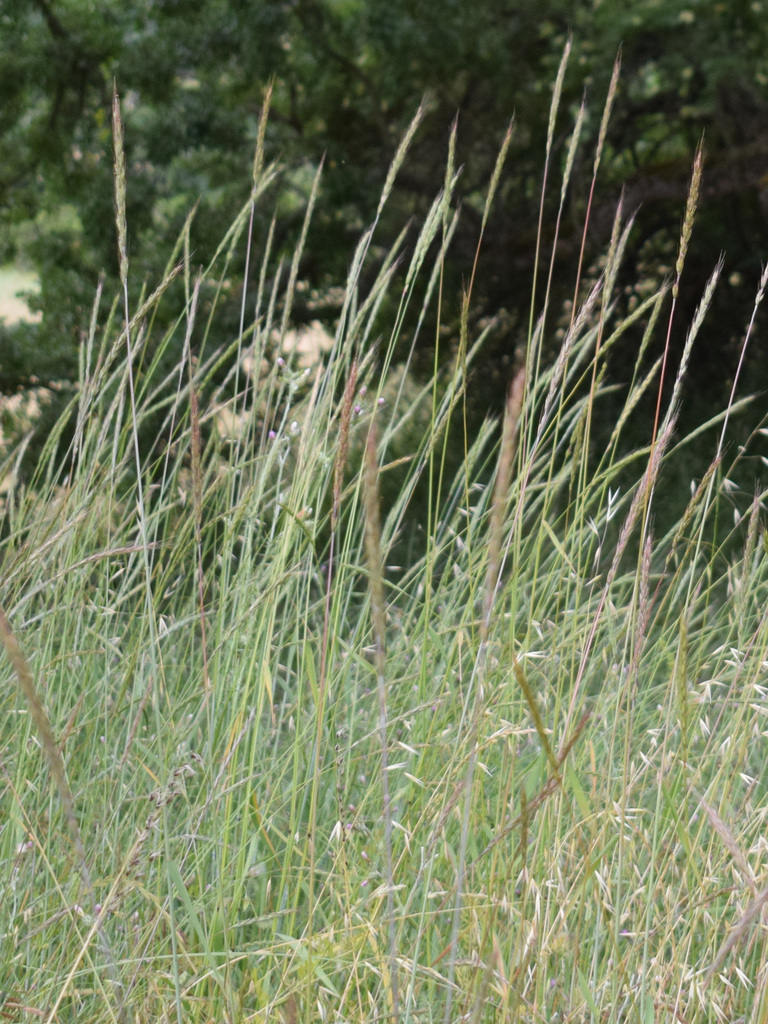
Blue Wildrye
Elymus glaucus
Care
full sun, part shade
low
adaptable; tolerates clay and seasonal moisture
2–4ft tall , 1–2ft wide
May-Jul · green
Semi-Deciduous
Resistant
Friendly
Throughout western North America
Nodding seed heads on upright stems
Excellent under oaks; cool-season grass; easy from seed
Care Guide
Planting
Plant blue wildrye in full sun (it tolerates part shade but prefers full sun) in fall or winter for best establishment. This grass is remarkably unfussy about soil - it handles clay, seasonal moisture, serpentine soil, and sodic soil - so amend only if your drainage is poor. Space plants about 2–3 feet apart to account for their mature height of 2–4 feet and their spreading via rhizomes.
After Planting
Water weekly for the first summer, then taper off; once established (year 2), it needs only water twice monthly or less through summer. In year 1, expect the plant to focus on root development rather than dramatic top growth. Blue wildrye is semi-deciduous and goes dormant in winter, so cut back dead growth in late winter or early spring. The biggest mistake is overwatering - this is a low-water native grass that actually prefers dry conditions once established, so let it go thirsty rather than wet.
Endangered & Threatened Species Supported
California Species of Special Concern due to habitat loss and localized population declines
Wildlife Supported
Birds
Primary seed source in fall and winter diet; flocks forage on mature seed heads
Year-round resident utilizing grass seeds as dietary staple; especially important in winter
Critical seed source during fall migration and wintering; major fall diet component Sep-Nov
Insects
Larval host plant; caterpillars feed on grass blades in spring
Fungal pathogen; can reduce seed productivity if infection occurs during anthesis
Larval host for grass-feeding moth species
Larval development on grass tissues during spring growth
Fungal pathogen affecting leaf surfaces; more problematic in cool, moist springs
Feeds on grass tissues throughout growing season
Mammals
Uses dense grass stands for denning and foraging habitat in chaparral-grassland ecotone
Reptiles
Utilizes dense grass clumps for refuge and thermoregulation; important microhabitat