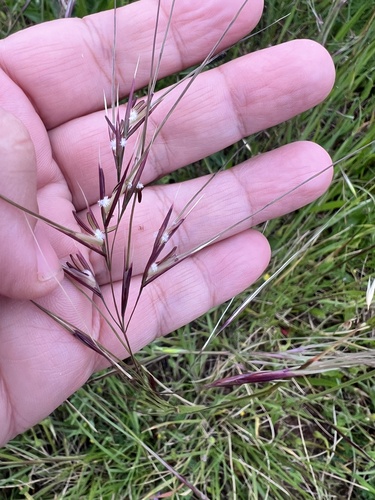
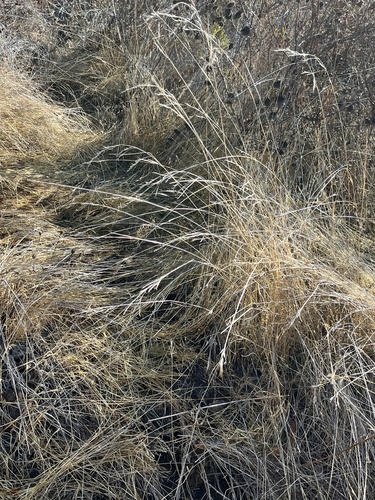
Purple Needlegrass
Stipa pulchra
Care
full sun
very low
adaptable; tolerates clay, serpentine, and poor soils
1–2ft tall , 1–2ft wide
Mar-May · purple-tinged
Semi-Deciduous
Resistant
Friendly
Throughout California in grasslands below 3000 ft
Airy flowering stems with purple-tinged awned seeds
State grass of California; long-lived perennial bunchgrass; restoration staple
Care Guide
Planting
Plant Purple Needlegrass in full sun or part sun in fall or winter - it's the best time to establish roots before the dry season. This native grass tolerates virtually every soil type, including poor, clay, and serpentine soils, so soil prep is minimal; just make sure your spot has adequate drainage. Space plants according to your design, keeping in mind they'll grow into a 1–2 foot tall bunchgrass that works beautifully as a lawn alternative or in a low-water meadow garden.
After Planting
Water weekly for the first summer to establish a deep root system, then reduce to once monthly once established - after that, you're essentially done watering. In late summer when the grass turns brown, cut it back to tidy up the plant. Don't overwater or worry about picky soil conditions; the biggest mistake is treating this drought-adapted native like a thirsty ornamental. Year 1 focuses on root establishment; by year 2, your Purple Needlegrass will be nearly self-sufficient and will produce abundant seeds that feed birds and wildlife.
Visit Calscape for more information about Purple Needlegrass
Endangered & Threatened Species Supported
Listed under ESA; California Species of Special Concern
Wildlife Supported
Birds

Nesting habitat critical Apr-Jul in native grasslands

Shelter and nesting substrate Apr-Jul

Important year-round seed source, especially late summer

Primary winter diet staple Dec-Feb

Post-breeding season seed consumption Sep-Nov

Seed cache and foraging Sep-Nov
Mammals

Cached seeds primary winter food source

Dense grass cover for burrow construction and foraging habitat

Seed collection and storage Aug-Oct
Insects

Grass rust pathogen Mar-Jun

Smut infection spring through seed maturation