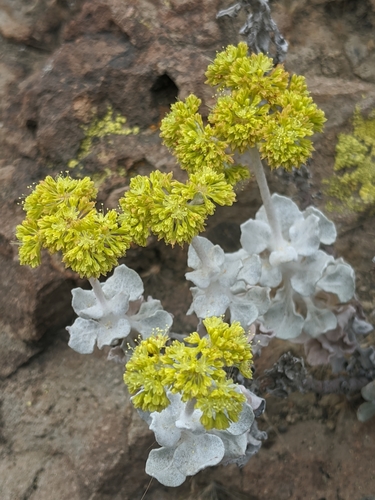
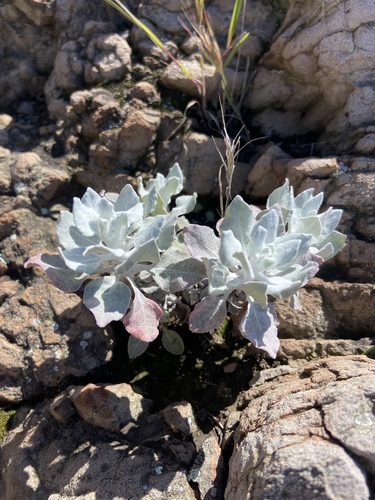
Conejo Buckwheat
Eriogonum crocatum
Care
full sun
very low
Medium, Slow; Generally rocky with clay, but tolerates other soils.
0–3ft tall , 2–3ft wide
Mar-Aug
Evergreen
Resistant
Friendly
Prized
Seeds eaten raw or ground into flour; traditionally used by Indigenous peoples
Coastal scrub and chaparral of Ventura County (Conejo Valley area), below 2000 ft elevation
Care Guide
Planting
Plant Conejo Buckwheat in full sun on a well-draining site; it thrives in rocky, clay-heavy soil but tolerates other soil types as long as drainage is adequate. Space plants about 0.5–1 meter (1.5–3 feet) wide, as this is their mature spread. Plant in spring or early fall to give roots time to establish before summer heat. Avoid low spots where water pools, since this rare buckwheat evolved on dry, open hillsides and won't tolerate soggy conditions.
After Planting
Water deeply but infrequently after planting - aim for established patterns by late summer or fall of year one. Once established, water no more than 3 times per month during summer, then taper off as temperatures cool. This plant is evergreen with no dormancy period and needs no pruning beyond removing dead wood. The most common mistake is overwatering; let the soil dry out between waterings and remember this plant evolved in rock crevices where water drains fast.
Endangered & Threatened Species Supported
California Species of Special Concern; monarch populations declining
Wildlife Supported
Insects

Primary blooming period provides forage for colony buildup

Early spring pollen and nectar for queen establishment and worker production

Early season nectar source for emerging syrphid flies

Spring migrants and breeding populations utilize nectar resources
Spring and early summer nectar source
Birds

Utilize buckwheat seeds in autumn diet when available

Autumn seed availability during post-breeding dispersal

Winter seed consumption during passage and overwintering periods