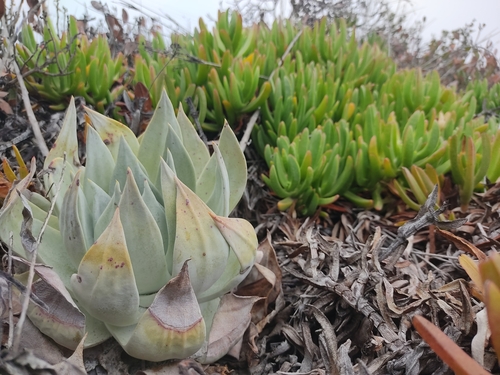
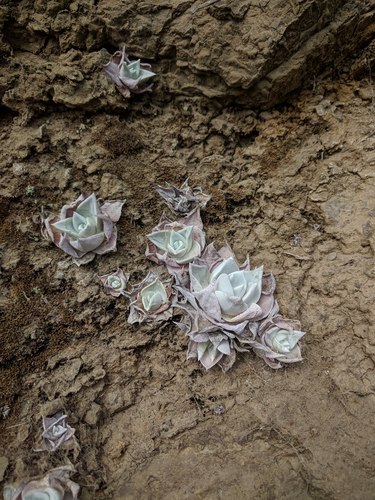
Chalk Live-for-ever
Dudleya brittonii
Care
full sun, part shade
very low
Resistant
Friendly
Leaves eaten raw or cooked; succulent leaves traditionally consumed
Coastal bluffs and chaparral of San Diego County, below 1500 ft elevation.
Care Guide
Planting
Plant your Chalk Live-for-ever in extremely well-drained soil - this is non-negotiable. If you're along the coast, full sun is ideal; if you're inland in the Bay Area where summers get hot, give it afternoon shade to prevent stress. This succulent thrives in containers or tucked into rock gardens and wall cracks, mimicking its native Baja California cliff habitat. Plant it in spring or early summer for best establishment.
After Planting
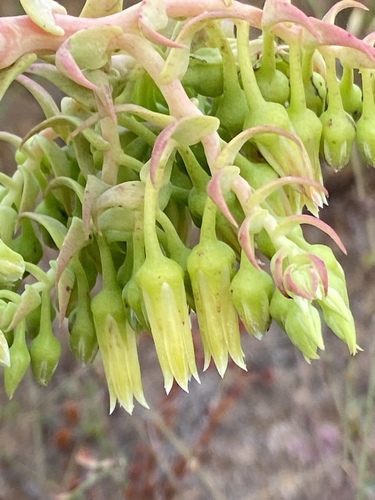
Water sparingly during the growing season and keep the soil dry in summer months - overhead watering is your enemy, especially June through September. The #1 mistake people make is overwatering, which quickly kills this drought-adapted plant. Once established, it needs almost nothing; you're aiming for a plant that thrives on neglect rather than fussing. In late spring to early summer, you'll get a bonus: silvery-white flower spikes that blush red and open into yellow blooms that pollinators love.
Visit Calscape for more information about Chalk Live-for-ever
Endangered & Threatened Species Supported
Listed under ESA and CESA
Coastal bluff scrub endemic to San Diego County
Species of Special Concern in California
Brush rabbit is a Species of Special Concern
Wildlife Supported
Birds
Nesting substrate on coastal bluff scrub; plant density provides nesting cover

Nesting habitat and foraging substrate in coastal sage scrub associations

Desert scrub nesting substrate; year-round resident in appropriate coastal desert habitat
Insects

Host plant for specialized herbivorous insects adapted to succulent foliage
Limited nectar production during bloom; supplementary resource in early spring
Mammals

Supplementary forage in coastal scrub communities; drought-resistant leaves valuable in dry seasons

Herbivorous foraging on succulent foliage; consistent resource in native habitat
Reptiles

Microhabitat use in dense succulent colonies; foraging beneath and around rosettes

Microhabitat shelter among rosette clusters; refuge from predators and extreme temperatures

Use of dense rosettes for microhabitat and predator avoidance in open scrub