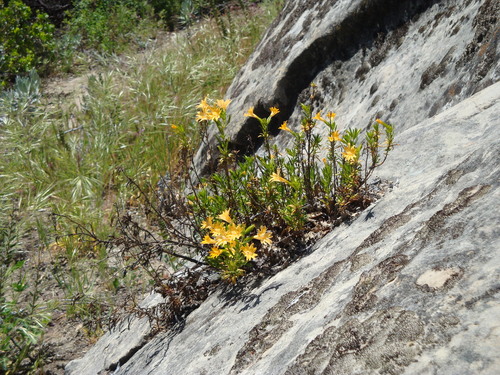
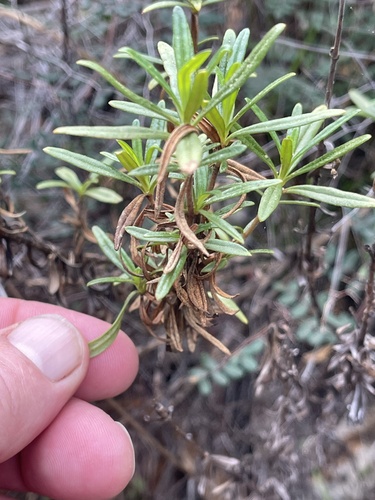
Chapparal Monkeyflower
Diplacus linearis
Care
full sun
very low
Fast
Mar-May
Resistant
Friendly
Prized
Chaparral of the Transverse and Peninsular ranges in southern California from Kern to San Diego counties, 1000-4000 ft elevation.
Care Guide
Planting
Plant your Chaparral Monkeyflower in full sun with fast-draining soil - this is non-negotiable, as the plant evolved in dry chaparral conditions. The best planting window is likely fall or winter when Bay Area moisture is highest, giving roots time to establish before summer heat arrives. Space according to the mature size of your plant, and choose a location where it won't compete with thirsty neighbors.
After Planting
Water deeply but infrequently during your plant's first summer to encourage deep rooting, then cut back to once a month or less as it becomes established. Once established, stop supplemental watering entirely - this plant thrives on rainfall alone and is extremely drought tolerant, even by Bay Area standards. The #1 mistake people make is overwatering; err on the side of dry, and remember that spring blooms (March–May) happen without your help once the plant is rooted in.
Visit Calscape for more information about Chapparal Monkeyflower
Endangered & Threatened Species Supported
Listed under ESA; California Species of Special Concern
California Species of Special Concern
Wildlife Supported
Insects

primary pollinator for monkeyflower blooms

early season nectar source during chaparral flowering
fungal endophyte colonizing plant tissues
Birds

nesting and perching habitat in chaparral

winter habitat and cover in chaparral scrub
Mammals

browse herbaceous growth in chaparral
Reptiles

refuge under dense chaparral vegetation