Black Hawthorn
Crataegus douglasii
Care
full sun, part shade
moderate
Slow, Medium; Prefers deep, moist, fine-textured soil.
15–15ft tall
Mar-May
Prized
Fruit eaten fresh or cooked; traditional Indigenous food
Northern California from the Cascade Range and Sierra Nevada foothills north to Oregon, 2000-6000 ft elevation in riparian and mixed conifer forests.
Care Guide
Planting
Plant your black hawthorn in full sun in a location with good drainage - it tolerates both slow and medium drainage but prefers deep, moist, fine-textured soil. Space it where its 1–2 cm thorns won't catch passersby, and plan for it to reach about 15 feet tall. Fall or early spring is ideal for planting in the Bay Area.
After Planting
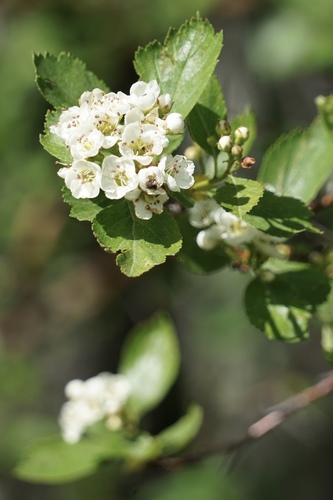
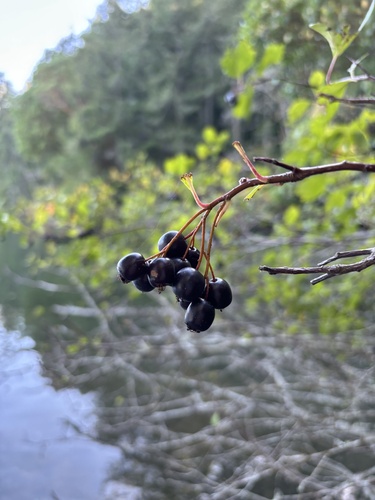
Water moderately during the first growing season to establish the plant, then reduce frequency once it's settled in - this is a moderate-care native that doesn't need coddling once established. Expect white flowers with greenish centers in spring (March–May) followed by dark purple fruits that wildlife will appreciate. Prune only to remove dead wood or shape the plant; avoid heavy pruning since the plant naturally grows as a compact, bushy shrub. The #1 mistake is overwatering - black hawthorn is drought-tolerant once established, so let the soil dry between waterings rather than keeping it constantly wet.
Endangered & Threatened Species Supported
California Species of Special Concern
Wildlife Supported
Birds

Fall and winter fruit foraging, staple resource Nov-Jan

Migrant; autumn fruit staging before southward migration Aug-Sep

Late-season fruit consumption Oct-Nov in montane populations

Fall migration food source Sep-Oct for northbound and southbound transients
Insects

Primary host plant; larvae defoliate branches Apr-Jun

Larval host plant; caterpillars feed on new growth May-Jun

Larval host plant; caterpillars feed on foliage Apr-May

Specialist forager on hawthorn flowers; spring activity Apr-May

Wood-boring beetle; larvae develop in branches and stems year-round

Fall carbohydrate foraging on fruits Sep-Oct

Multiple species visit flowers for pollen Apr-Jun

Spring bloom foraging Mar-May for nectar and pollen
+1 more species