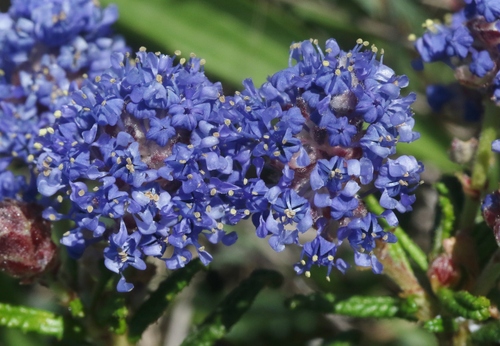
Hearst's Ceanothus
Ceanothus hearstiorum
Care
full sun
low
Fast, Medium, Slow; Tolerates sandy/rocky, clay or adobe soils but not pure beach sand. Tolerates sodic soil..
0–1ft tall , 8–8ft wide
Jan-Dec
Evergreen
Resistant
Friendly
Yes
Prized
Supports up to 120 butterfly and moth species in Mediterranean California
Chaparral in the Temblor Range and surrounding areas of Kings and Kern counties, 2000-3500 ft elevation
Care Guide
Planting
Plant Hearst's Ceanothus in full sun in fast-draining soil - it tolerates sandy, rocky, clay, or adobe soils, but avoid pure beach sand. This low-growing, mat-forming shrub works well as a groundcover or for bank stabilization. If you're planting inland (away from the coast), give it afternoon shade to keep it cool and mimic its native foggy coastal habitat. Plant in fall or winter to establish roots before summer heat.
After Planting
Water occasionally during the first summer to help it establish, then taper to a maximum of twice monthly once established - this is a drought-tolerant plant that prefers dry conditions. If you're inland, give it an occasional rinse in summer to help manage heat stress. The #1 mistake is overwatering: this plant evolved on San Luis Obispo's coastal bluffs and will rot in soggy soil, so err on the dry side. Prune lightly after flowering (winter to spring) to maintain its compact, spreading form.
Visit Calscape for more information about Hearst's Ceanothus
Endangered & Threatened Species Supported
Brush rabbit is a Species of Special Concern
Wildlife Supported
Insects

larvae feed on Ceanothus foliage in spring months
primary pollinators; visit flowers during spring blooming

larvae feed on Ceanothus foliage during spring development

forage on Ceanothus flowers during spring bloom period
caterpillars develop on Ceanothus species in spring
Mammals

browse on Ceanothus foliage year-round, especially important in winter

feed on foliage and branches year-round in chaparral habitats

browse on foliage and twigs during winter months when other food scarce
Birds
browse on foliage and seeds as supplemental diet throughout year