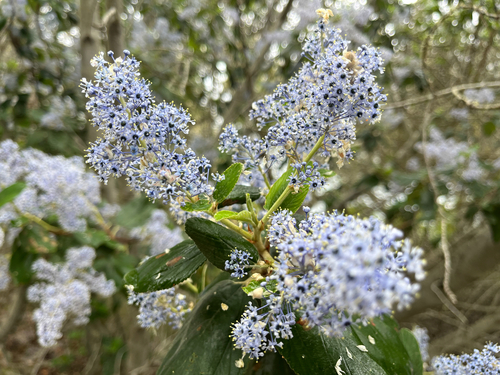
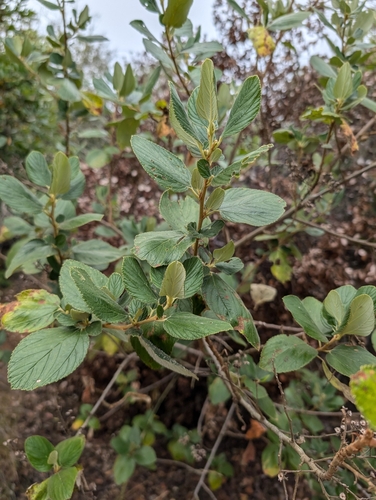
Cliff Schmidt Ceanothus
Ceanothus arboreus 'Cliff Schmidt'
Care
full sun
very low
Fast, Medium; Tolerates a variety of soils but does best and lives longest in well drained soil.
20–30ft tall , 10–10ft wide
Jan-Dec
Evergreen
Resistant
Yes
Prized
Supports up to 120 butterfly and moth species in Mediterranean California
Coastal sage scrub on Santa Catalina Island off Los Angeles County, below 1500 ft elevation
Care Guide
Planting
Plant your Cliff Schmidt Ceanothus in full sun with fast-draining soil - this is non-negotiable for a long life. It tolerates a variety of soils but truly thrives in well-drained conditions, so amend heavy clay with compost or plant on a slope if needed. The best time to plant is fall or early winter to establish roots before summer heat arrives. Space it where it has room to grow 20–30 feet tall, and note that it's evergreen year-round.
After Planting
Water weekly during your first summer to establish roots, then drastically reduce watering - once established (typically by year two), stop summer irrigation entirely and let nature take over. The #1 mistake people make is overwatering, which actually shortens this plant's lifespan; think of it like the Channel Islands where it naturally grows, and you'll understand it wants neglect. Expect bright blue flowers in winter and spring. Prune only as needed for shape, and accept that despite its fast growth, ceanothus can be short-lived - but faithful desert gardening practices maximize your chances.
Visit Calscape for more information about Cliff Schmidt Ceanothus
Wildlife Supported
Insects

Early season forage for colony establishment

Larval host plant; larvae roll and feed on leaves

Spring and early summer nectar source

Larval feeding on plant tissues

Induces galls on ceanothus foliage and flowers

Larval mines in ceanothus leaves

Adult nectar feeding; beneficial predator of aphids

Spring flower visitor
+4 more species