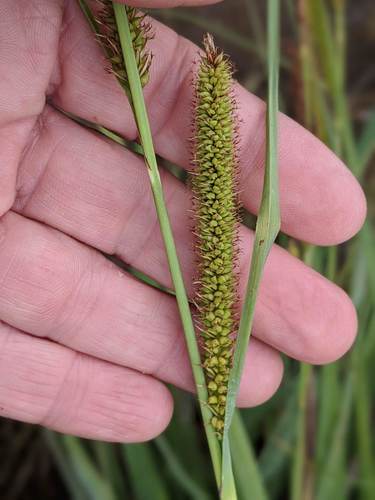
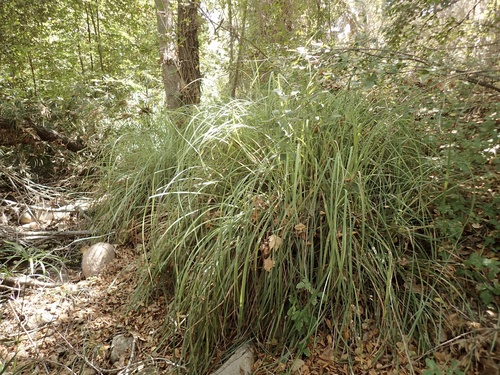
San Diego Sedge
Carex spissa
Care
full sun
low
Slow; It is said to have a strong affinity to serpentine soils but is also found in other soil types. Tolerates serpentine soil..
2–4ft tall , 2–4ft wide
Evergreen
Resistant
Friendly
Coastal marshes and wetlands from San Diego to Santa Barbara counties, below 500 ft elevation, extending to northern Baja California
Care Guide
Planting
Plant San Diego Sedge in full sun - it will become weedy and unattractive in even partial shade. It thrives in heavy, moist soils and is ideal for spots along creeks, seeps, or other naturally wet areas; if your garden doesn't have naturally moist conditions, plan to irrigate regularly. This evergreen sedge can reach 2–4 feet tall, so give it adequate space to spread. Plant in fall or early spring for best establishment.
After Planting
Water weekly during your first summer to establish the plant, then reduce to once weekly or less as it matures. Once established, San Diego Sedge needs only minimal supplemental water in the Bay Area - the key is ensuring the soil stays consistently moist, not dry. The #1 mistake is planting it in part shade or allowing the soil to dry out; this causes the plant to look straggly and stressed (leaves may turn reddish-brown). No regular pruning is needed; this is an easy, low-maintenance plant once you get the sun and water conditions right.
Endangered & Threatened Species Supported
California Clapper Rail; federally and state endangered
California Species of Special Concern
Wildlife Supported
Birds

uses dense sedge stands in coastal marshes for nesting cover and foraging habitat

hunts voles and mice in open sedge areas; sedge provides habitat for prey species

winter ground forager for small seeds in coastal sage and riparian margins

hunts small mammals in sedge-dominated wetland margins and grasslands

forages on sedge seeds in fall and winter months
Insects

larvae feed on sedge leaves in spring, emerging as adults by early summer
Mammals

primary seed consumer, especially important fall through spring

forages on sedge seeds and uses dense sedge clumps for nesting cover