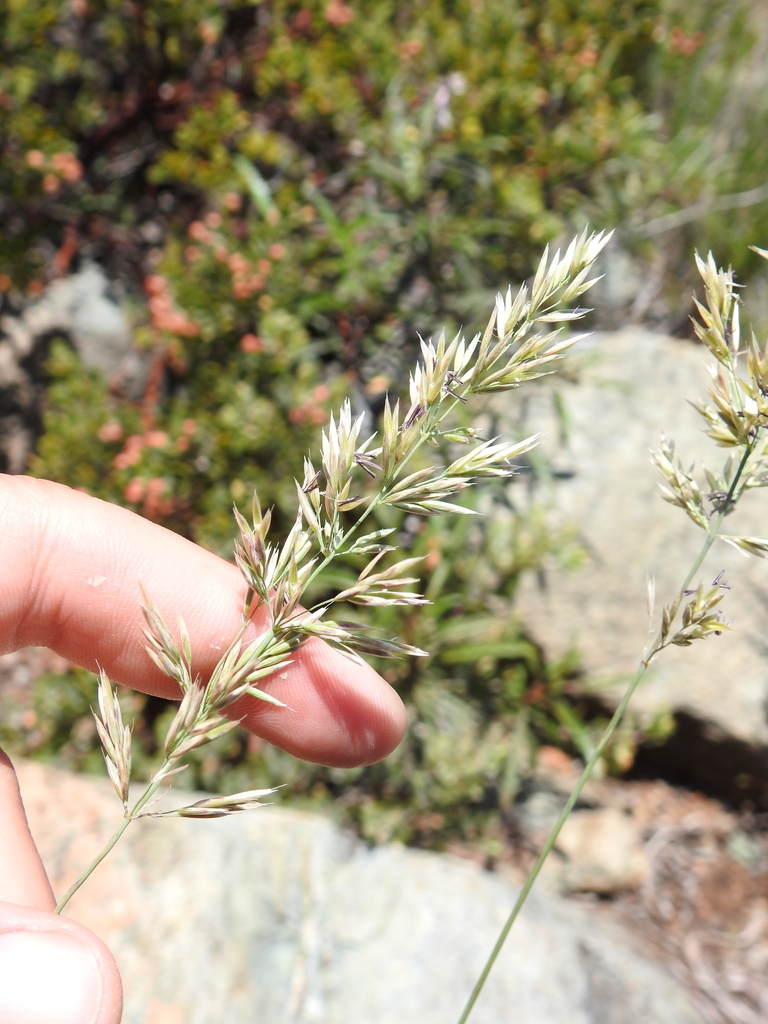
Serpentine Reed Grass
Calamagrostis ophitidis
Care
full sun, part shade
2–3ft tall
Resistant
Friendly
Serpentine grassland and scrub in the Diablo Range and surrounding areas of Alameda and San Mateo counties, 500-2000 ft elevation
Care Guide
Planting
Plant your Serpentine Reed Grass in full sun - it thrives in bright conditions. This native California grass is adapted to serpentine soils found in mountain areas north of the Bay Area, so it prefers well-draining soil; if your garden has heavy clay, amend with compost or sand before planting. Space plants about 2 to 3 feet apart to account for their mature clumping size of 2 to 3 feet tall.
After Planting
Water regularly during the first growing season to help establish the plant, then reduce watering as it matures - this grass is adapted to dry conditions once established. In late winter or early spring, cut back the previous year's dried foliage to make room for new growth. The biggest mistake gardeners make is overwatering; remember this is a hardy native that tolerates lean, well-draining sites.
Visit Calscape for more information about Serpentine Reed Grass
Endangered & Threatened Species Supported
San Diego endemic whiptail
Wildlife Supported
Birds
resident year-round in serpentine grasslands; uses seeds as staple food
primary seed foraging during winter months Nov-Mar in California foothills
nesting season Apr-Jun; forages for insects in grass stands
Mammals
seed collection and caching Sep-Nov; critical pre-winter food source
Reptiles
uses dense grass structure for cover and movement corridors