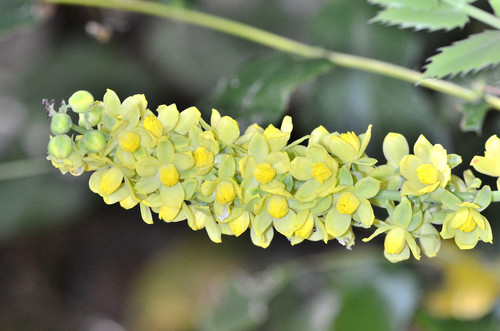
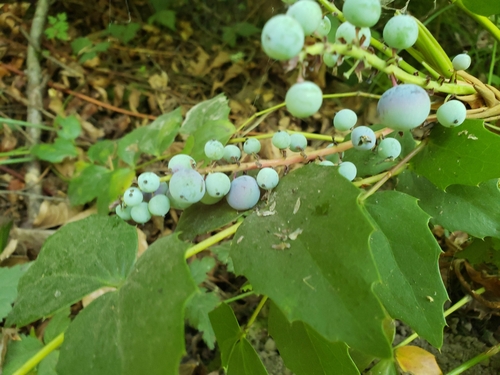
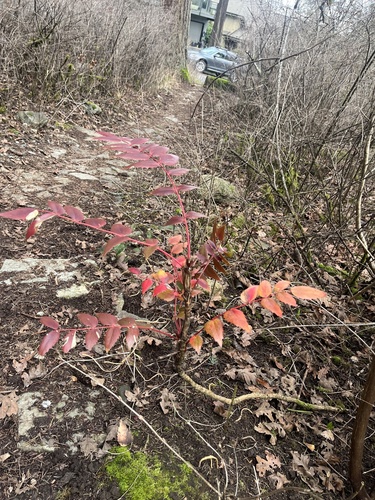
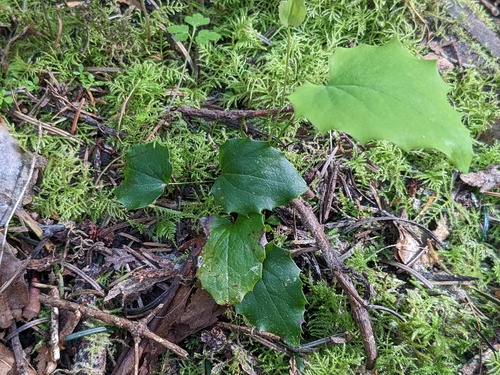
Cascade Barberry
Berberis nervosa
Care
part shade
moderate
Fast; Prefers well drained acidic soil.
1–7ft tall , 7–7ft wide
Mar-May
Evergreen
Resistant
Friendly
Berries eaten fresh or cooked
Riparian woodlands and oak woodland in southwestern Oregon and northern California, below 4000 ft elevation
Care Guide
Planting
Plant your Cascade Barberry in partial shade with fast-draining, acidic soil - think woodland conditions rather than full sun. Space it where it has room to spread, since the foliage can reach up to 6 feet tall even though the stems stay low. Fall or early spring is ideal for planting in the Bay Area. This native shrub is cold-hardy to -15°F, so it's comfortable with our winters.
After Planting
Water moderately through your first summer, but once established (typically by year two), you can back off to watering just once a month or less during summer. The #1 mistake is overwatering - this plant evolved in well-drained forest soils and will suffer in wet conditions. Prune only as needed to shape it or remove dead wood; it naturally stays under 12 inches at the base with spreading foliage above, and doesn't require heavy maintenance.
Wildlife Supported
Birds

Dense evergreen structure provides nesting and foraging cover during breeding season in understory
Insects

Spring flowering period provides early season nectar for queen establishment

Larval host plant; mining larvae develop within foliage during summer months

Early spring pollen source for native mining bee populations during emergence period
Mammals

Browsing on evergreen foliage, particularly important winter forage in Pacific Northwest