Whiteleaf Manzanita
Arctostaphylos viscida
Care
full sun, part shade
very low
Fast, Medium, Slow; Tolerates a variety of soils including clay and decomposed granite. Tolerates serpentine soil..
8–16ft tall , 12–12ft wide
Jan-Dec
Evergreen
Resistant
Prized
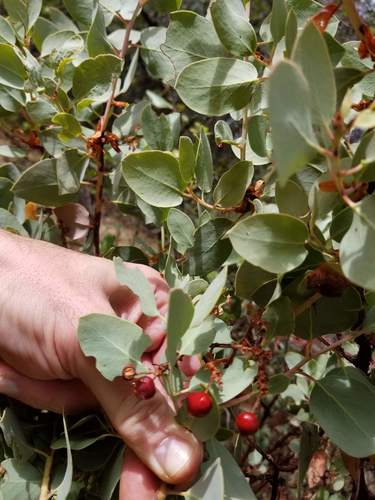
Berries eaten fresh or made into beverages; traditional Indigenous food source
Supports up to 68 butterfly and moth species in Mediterranean California
Chaparral and oak woodland from the inner Coast Ranges to the Sierra Nevada foothills in central California, 500-3000 ft elevation
Care Guide
Planting
Plant your whiteleaf manzanita in full sun with fast-draining soil - it thrives in decomposed granite, clay, and even serpentine soil, so you have flexibility here. The plant tolerates cold down to 0°F, making it well-suited to Bay Area winters. Space it according to its mature size of 8–16 feet tall, and plant in fall or winter when the plant can establish roots before summer heat.
After Planting
Water twice monthly during the first summer to establish the plant, then cut back to minimal supplemental water once established - this is a low-water native that needs very little summer irrigation. Expect flowers in winter and spring. The biggest mistake people make is overwatering; resist the urge to irrigate frequently, as this plant evolved in dry chaparral and coniferous forests and will rot in soggy soil. Year one is about establishing a deep root system; after that, your manzanita should thrive on rainfall alone in most Bay Area locations.
Visit Calscape for more information about Whiteleaf Manzanita
Endangered & Threatened Species Supported
California Species of Special Concern; population fluctuations noted
Wildlife Supported
Birds

Critical early spring nectar source for breeding season
Insects

Early season forager when manzanita blooms

Significant early-season nectar source

Leaf-mining larval host plant

Sap-feeding specialist on manzanita

Post-hibernation nectar source

Early season floral resource

Spring pollen provisioning for nesting

Leaf-feeding beetle
+5 more species