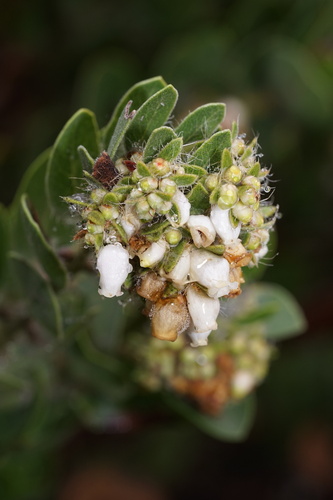
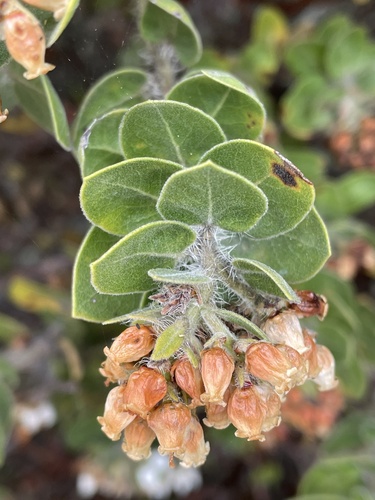
Green Witch Manzanita
Arctostaphylos viridissima 'Green Witch'
Care
full sun, part shade
very low
Fast
3–13ft tall
Jan-Dec
Evergreen
Resistant
Prized
Berries eaten fresh or made into beverages; traditional Indigenous food source
Supports up to 68 butterfly and moth species in Mediterranean California
Chaparral in Kern and Tulare counties in the southern Sierra Nevada foothills, 1500-3000 ft elevation
Care Guide
Planting
Plant your Green Witch Manzanita in full sun with fast-draining soil - this Channel Islands native thrives in lean conditions and will rot in poor drainage. Space it according to its mature size, which can range from a 3-foot matte shrub to a 13-foot spreading form depending on your site conditions. Plant in fall or winter when the plant can establish roots before summer heat arrives.
After Planting
Water weekly during your plant's first summer to establish a deep root system, then transition to very low water - essentially rainfall only once established, typically by year two. Manzanitas resent being fussed with, so avoid heavy pruning; light shaping after flowering (spring) is fine if needed. The #1 mistake Bay Area gardeners make is overwatering out of kindness - this plant wants neglect, not attention, and will die faster from wet feet than from drought.
Visit Calscape for more information about Green Witch Manzanita
Endangered & Threatened Species Supported
Brush rabbit is a Species of Special Concern
Wildlife Supported
Insects

host plant; foliar infection occurs during wet season

endophytic fungus; disease expression increases during drought stress
feeds on plant sap; overwinters on host plant

phloem feeder; establishes colonies on stems and leaves
Mammals

browses leaves and stems; important year-round forage in chaparral

browses stems and leaves during winter when other food sources scarce
Birds
forages for seeds during fall dispersal; supplements winter diet