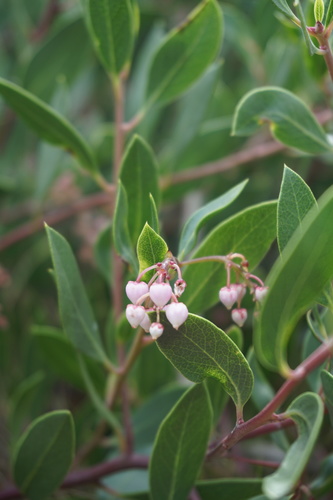
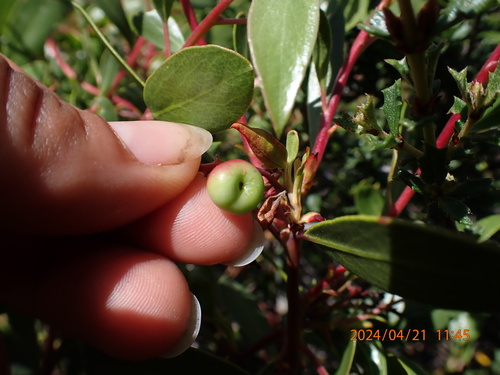
Rincon Manzanita
Arctostaphylos stanfordiana ssp. decumbens
Care
part shade
very low
Medium, Slow; Tolerates clay soil. Tolerates serpentine soil..
4–9ft tall , 6–6ft wide
Jan-Dec
Evergreen
Resistant
Friendly
Prized
Berries eaten fresh or made into beverages; traditional Indigenous food source
Supports up to 68 butterfly and moth species in Mediterranean California
Chaparral in the Rincon Range of Sonoma County, 1000-2500 ft elevation
Care Guide
Planting
Plant Rincon Manzanita in fall or winter when the soil is moist, choosing a spot with partial shade. This shrub is remarkably tolerant of Bay Area soils - it thrives in clay and even serpentine soil - but drainage matters, so avoid spots where water pools. Space plants 4 to 6 feet apart if you're creating a hedge, and give each plant room to reach its full 4 to 9 feet tall.
After Planting
Water weekly during your first summer, then taper to twice monthly once established (by year two). After that, this is a truly low-maintenance plant that rarely needs supplemental water in the Bay Area. Avoid the #1 mistake: overwatering during the dry season, which can rot the roots. Prune lightly after flowering in spring if you want to shape it; the plant's naturally attractive bark and evergreen foliage are its best features, so resist heavy pruning.
Endangered & Threatened Species Supported
California Species of Special Concern
California Species of Special Concern
Wildlife Supported
Birds

Dense growth provides cover for nesting and predator avoidance year-round

Forage and cache seeds in fall; dispersal agent for plant regeneration

Spring migration staging; early season nectar for breeding season energy
Insects

Early season nectar source for queen establishment and colony founding

Spring foraging during adult emergence and breeding season
Mammals

Browse on foliage and shoots during fall and winter drought periods

Cache seeds in fall when available from mature plants