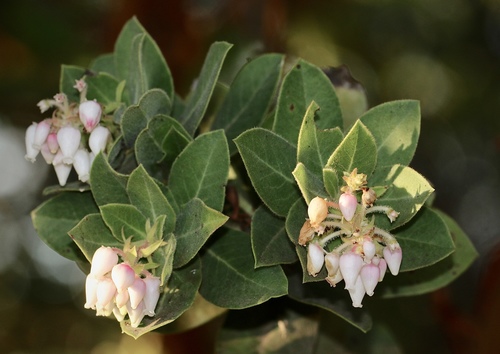
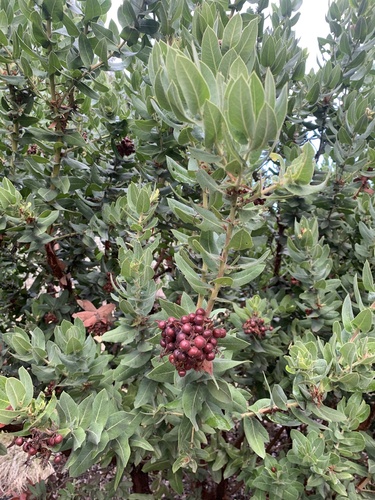
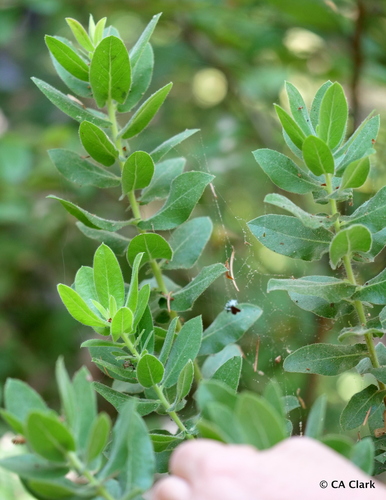
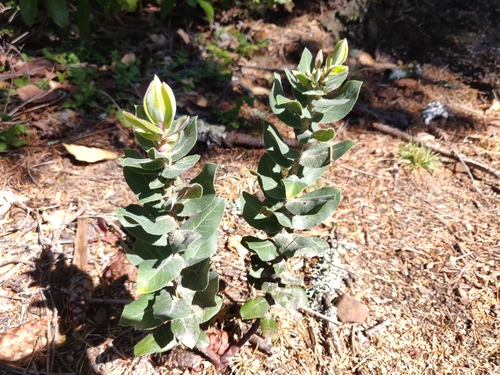
Kings Mountain Manzanita
Arctostaphylos regismontana
Care
full sun
low
Fast
7–13ft tall
Jan-Dec
Evergreen
Resistant
Prized
Berries eaten fresh or made into beverages; traditional Indigenous food source
Supports up to 68 butterfly and moth species in Mediterranean California
Chaparral on Kings Mountain and surrounding ridges in San Mateo County, 1500-2500 ft elevation
Care Guide
Planting
Plant your Kings Mountain manzanita in full sun with fast-draining soil - it thrives on the granite and sandstone soils found in the Santa Cruz Mountains, so amend heavy clay with coarse sand or perlite if needed. This evergreen shrub will reach 7 to 13 feet tall, so give it space to grow without crowding other plants. Plant in fall or winter when the plant is dormant to help it establish before summer heat arrives.
After Planting
Water weekly during your first summer, then gradually reduce watering frequency as the plant becomes established - by year two, it should thrive on rainfall alone as a low-water native shrub. The #1 mistake Bay Area gardeners make is overwatering once the plant is mature; manzanitas are adapted to dry summers and will rot if kept too wet. Pruning isn't necessary for this naturally dense, hairy shrub, though you can remove dead wood after flowering (winter through spring). Expect year-round blooms and enjoy visits from hummingbirds, bats, and native butterflies - this plant is also deer resistant, so wildlife will visit but your neighbors' deer won't browse it.
Visit Calscape for more information about Kings Mountain Manzanita
Endangered & Threatened Species Supported
Brush rabbit is a Species of Special Concern
Wildlife Supported
Birds

Dense evergreen structure provides critical nesting and roosting habitat; year-round refuge

Nests in manzanita shrubs during breeding season April-June

Uses manzanita thickets for shelter and foraging substrate year-round in montane regions
Insects

Host-specific aphid; populations peak in spring and early summer during new growth
Mammals

Browse leaves and stems year-round; increased browsing pressure during winter when other forage limited

Uses dense manzanita thickets for shelter; browses foliage opportunistically year-round

Nests within dense manzanita stands; year-round resident in chaparral habitat