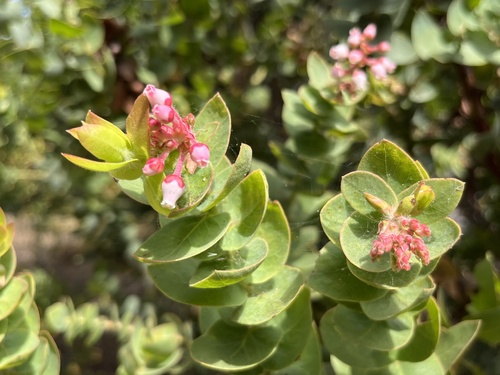
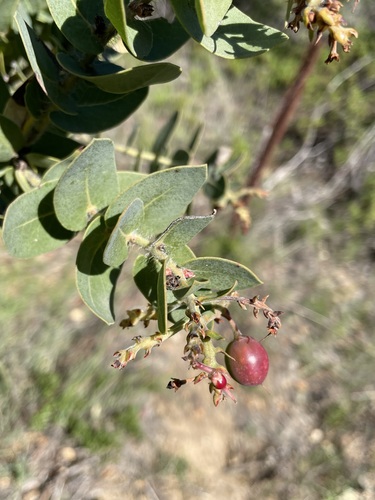
Pink-flowered Refugio Manzanita
Arctostaphylos refugioensis 'Pinky'
Care
full sun
very low
Fast, Medium; Sandstone.
7–13ft tall , 7–7ft wide
Jan-Dec
Evergreen
Resistant
Prized
Berries eaten fresh or made into beverages; traditional Indigenous food source
Supports up to 68 butterfly and moth species in Mediterranean California
Chaparral in Santa Barbara County, particularly in the Refugio area, below 2000 ft elevation
Care Guide
Planting
Plant your Pink-flowered Refugio Manzanita in full sun with fast-draining soil - sandstone or sandy loam is ideal, as this plant comes from coastal chaparral and won't tolerate heavy, wet soils. The best planting window is fall through early spring when the plant can establish roots before summer heat. Space it where it has room to grow 7–13 feet tall, and don't amend the soil with rich compost; native, lean soil actually works better for this species.
After Planting
Water weekly through your first summer, then cut back to twice monthly or less once established - this is a very low-water plant and overwatering is the #1 way to kill it. Once it's rooted in (typically by year two), you can often get by with no summer irrigation if you have any coastal influence or winter rain. Avoid heavy pruning; this manzanita flowers in winter and early spring, so any trimming should happen after blooms fade. The plant is evergreen and cold-hardy to 10°F, so it's tough once established - just don't baby it with water.
Visit Calscape for more information about Pink-flowered Refugio Manzanita
Wildlife Supported
Birds

Year-round resident in California; critical early spring resource for breeding territory establishment

Spring migration stopover for northbound birds; critical fuel source late Feb-Apr
Insects

Early spring nectar source for colony establishment

Spring foraging for queen and worker nutrition

Early spring nectar and pollen forage when few other native sources available