Chalk Dudleya
Dudleya pulverulenta
Care
full sun, part shade
very low
well-drained, rocky; excellent drainage essential
0–1ft tall , 0–1ft wide
May-Jul · red
Evergreen
Resistant
Friendly
Prized
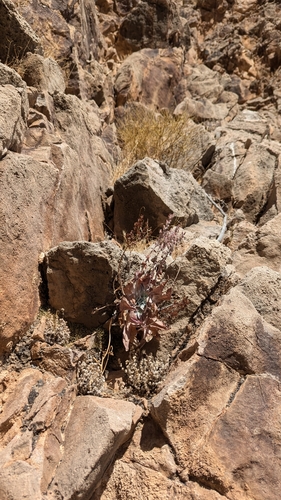
Southern California and Baja California coastal mountains
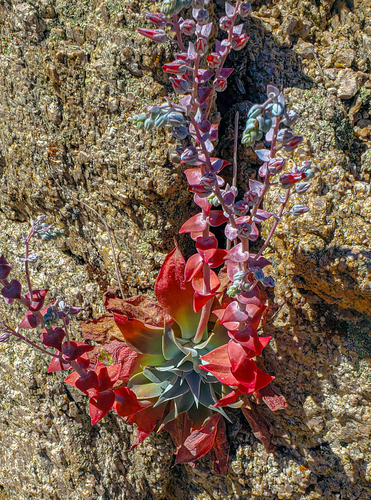
Tall branching stalk of bright red flowers above chalky rosette
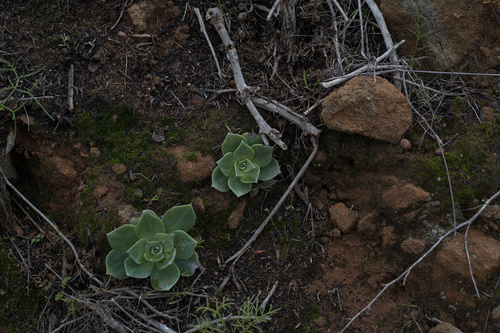
Striking chalky white succulent rosette; protect from summer water
Care Guide
Planting
Plant your chalk dudleya in full sun with well-draining, rocky soil - excellent drainage is essential since the rosette hates pooling water. Tilt or angle the plant slightly when planting to help water run off. This plant does well in containers, on rocky slopes, or in rock walls, and thrives in a variety of garden soils as long as rocks are added. Plant in fall or winter for best establishment.
After Planting
Water very infrequently once established - just once a month maximum during summer, and less in other seasons. Expect your plant to go partially dormant in summer with only a tiny area in the middle appearing alive, which is completely normal and not a sign of trouble. Watch for aphid infestations, which can deform flowers and the rosette itself. The #1 mistake is overwatering; if you're uncertain, err on the side of dryness.
Endangered & Threatened Species Supported
Sonoran bumblebee, California candidate
Wildlife Supported
Birds

Primary nectar source May-July during bloom; supports early breeding season energy demands
Spring migration staging and early breeding season nectar source May-June
Insects

Forages on flowers May-July; important pollinator during peak bloom

Summer nectar source June-July; supports wasp populations in coastal sage scrub

Forages during May-July bloom period; assists in pollination

Visits flowers May-July; supports colony provisioning during spring emergence