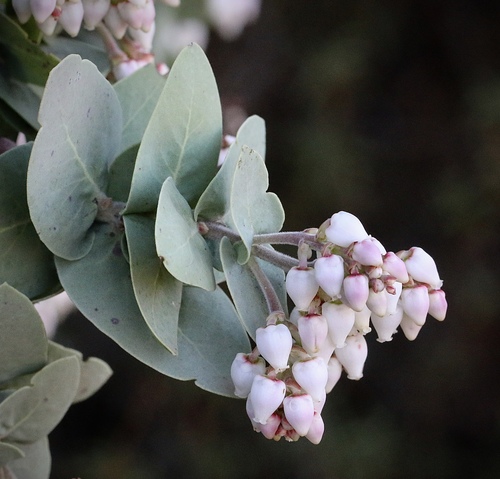
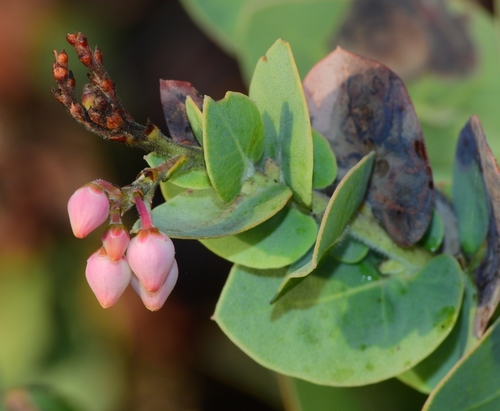
Gabilan Manzanita
Arctostaphylos gabilanensis
Care
3–3ft tall
Evergreen
Resistant
Friendly
Prized
Berries eaten fresh or made into cider; traditional Indigenous use
Supports up to 68 butterfly and moth species in Mediterranean California
Chaparral in the Gabilan Range of Monterey County, 2000-3500 ft elevation
Care Guide
Planting
Plant your Gabilan manzanita in a location with excellent drainage, as this rare species comes from chaparral habitat in the Gabilan Range where water doesn't linger. Space it according to its mature size - it can reach anywhere from 3 to 16 feet tall depending on growing conditions, so give it room to develop. Plant in fall or early winter to take advantage of the rainy season for establishment.
After Planting
Water regularly during your plant's first year to help it establish, then gradually reduce watering as it matures - manzanitas are adapted to dry summers once established. Prune lightly after flowering (which produces white or pink urn-shaped flowers) to maintain shape if desired. The biggest mistake is overwatering in year two and beyond; this plant evolved in dry chaparral and will decline with excessive water, especially during summer months.
Endangered & Threatened Species Supported
Brush rabbit is a Species of Special Concern
Wildlife Supported
Birds

Primary seed consumption during fall and winter when other food sources decline

May utilize cavities in dead manzanita branches for nest sites during breeding season
Mammals

Critical browse during winter months when preferred forage unavailable in Gabilan Range habitat

Dense manzanita provides hunting cover and den sites within chaparral landscape

Browsing on leaves and young shoots, especially during drought stress when other vegetation limited

Regular foraging on manzanita foliage and stems within dense shrub cover
Thick manzanita stands offer refuge and denning habitat in open chaparral
Insects

Local lepidopteran species utilize manzanita as larval host in Gabilan Mountain chaparral
Reptiles

Dense branching structure provides perching, foraging habitat, and predator refuge