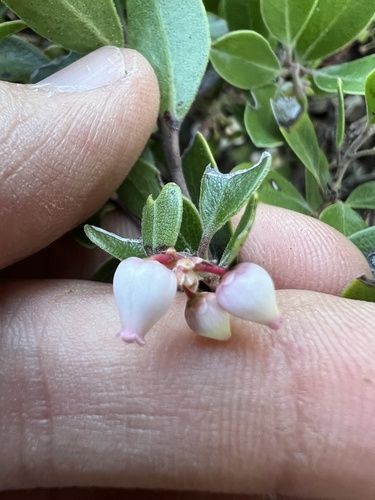
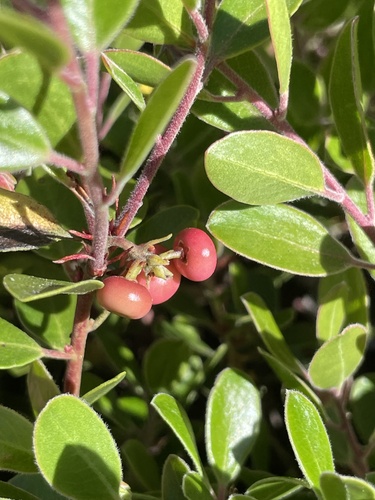
Franciscan Manzanita
Arctostaphylos franciscana
Care
full sun, part shade
very low
Fast, Medium, Slow; .
0–10ft tall , 10–10ft wide
Jan-Dec
Evergreen
Resistant
Prized
Berries eaten fresh or made into cider; traditional Indigenous use
Supports up to 68 butterfly and moth species in Mediterranean California
Chaparral on the Marin Headlands and surrounding areas of Marin County, below 1500 ft elevation
Care Guide
Planting
Plant your Franciscan Manzanita in full sun in a location with fast to medium drainage - this is non-negotiable for a manzanita. You can plant in fall or winter to give it time to establish before summer heat. Space according to the mature size you want (they range from under 1 ft to 10 ft depending on variety), and note that this plant works well as a hedge if you're planning a larger planting.
After Planting
Water weekly during your first summer, then taper to just twice monthly or less once established - manzanitas are drought-tolerant natives and actually prefer it dry. After year one, rainwater should sustain it through the Bay Area winter and spring blooms; resist the urge to water in summer, as overwatering is the #1 killer of manzanitas and leads to root rot. Pruning isn't mentioned in the data, so hold off until you see what the plant naturally wants to do, and remember this is an evergreen that will keep its leaves year-round.
Visit Calscape for more information about Franciscan Manzanita
Wildlife Supported
Insects

Specialist host plant for this aphid species; primary food source

Early season nectar source for queen establishment and colony founding
Specialized pollen collector and pollinator during manzanita bloom
Spring foraging resource for emerging colonies
Birds

Nesting and foraging habitat in dense manzanita thickets

Dense cover for roosting and brood protection
Mammals

Year-round browse and cover in coastal scrub habitat

Browse during autumn dry season; nutritious foliage