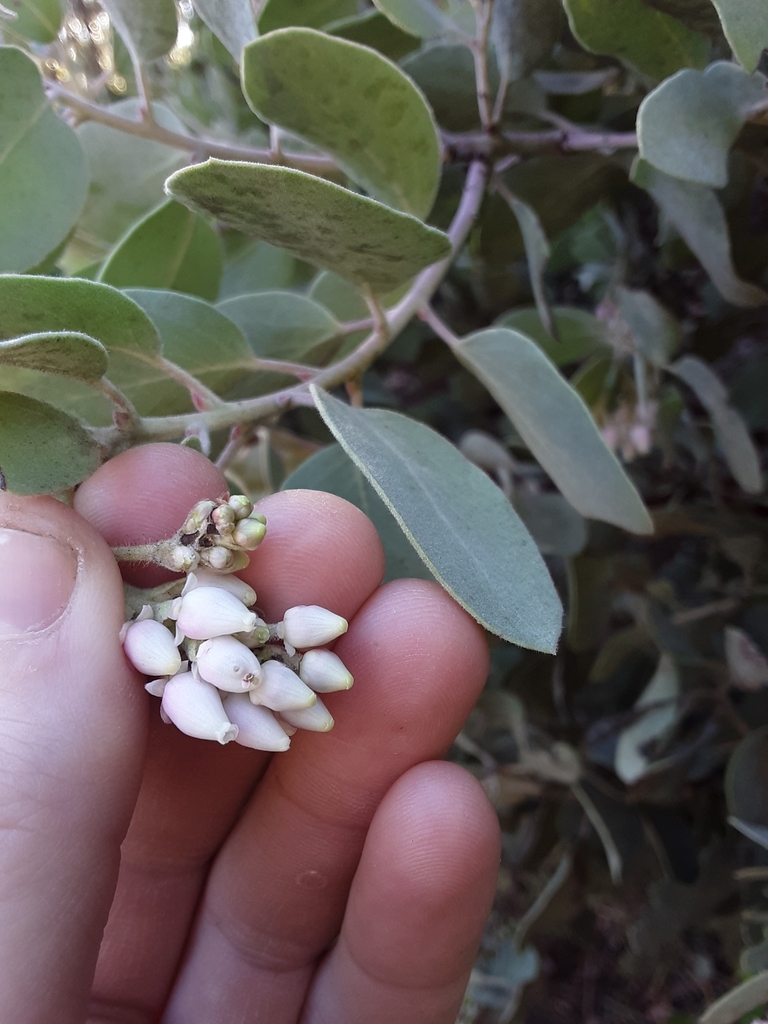
Hoary Manzanita
Arctostaphylos canescens
Care
full sun, part shade
very low
4–7ft tall
Jan-Dec
Evergreen
Resistant
Prized
Berries eaten fresh or made into cider; traditional Indigenous use
Supports up to 68 butterfly and moth species in Mediterranean California
Chaparral and oak woodland from the Sierra Nevada foothills to the Coast Ranges in central California, 500-5000 ft elevation
Care Guide
Planting
Plant your hoary manzanita in full sun with excellent drainage - this native chaparral shrub demands it. Space it 4 to 7 feet apart depending on whether you want a dense hedge or a more open form. Fall or early winter planting takes advantage of the rainy season and gives the plant time to establish before summer heat arrives.
After Planting
Water deeply but infrequently during the first growing season to encourage deep roots, then transition to very low water once established - typically by year two. Skip fertilizer and amendments; this plant evolved on poor, lean soils and resents rich conditions. Prune lightly after flowering in spring if needed to maintain shape, but hoary manzanita naturally grows into an attractive form. The biggest mistake Bay Area gardeners make is overwatering once the plant is established; resist the urge to treat it like a typical garden shrub.
Endangered & Threatened Species Supported
California Species of Special Concern
Wildlife Supported
Mammals
browse evergreen foliage especially in winter when other browse limited
foliage and tender shoots year-round in chaparral habitats
Birds
consume fallen seeds and dried fruit in post-breeding season
cache and consume manzanita seeds as fall/winter food resource
Insects
fungal associate/endophyte of manzanita tissues
phloem feeder on Arctostaphylos species throughout growing season