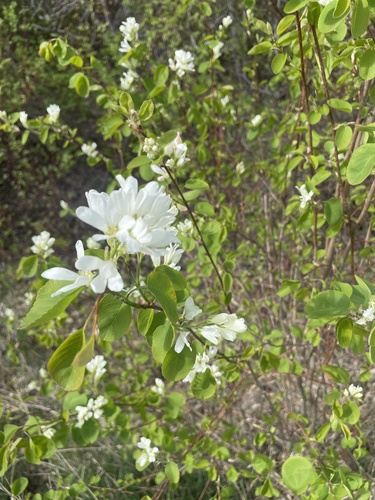
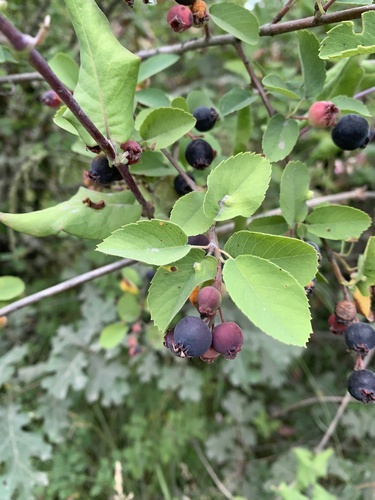
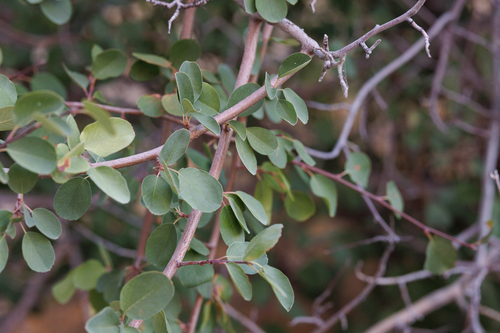
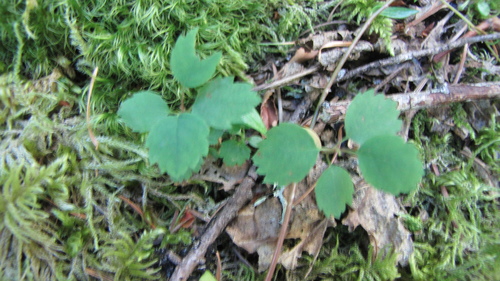
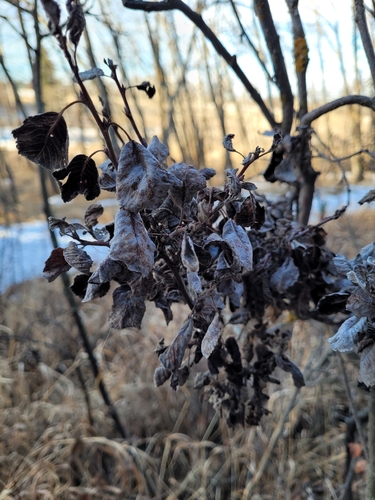
Western Serviceberry
Amelanchier alnifolia
Care
full sun, part shade
moderate
Fast, Medium; Adaptable, tolerant of sand, loam and clay. Prefers sandy loam or loam soils.
15–35ft tall , 15–20ft wide
Jun-Aug
Deciduous
Prized
Berries eaten fresh or dried; traditional Indigenous food
Supports up to 77 butterfly and moth species in Mediterranean California
Northern California mountains and foothills from Shasta County northward, 2000-5000 ft elevation, extending to Oregon and eastward.
Care Guide
Planting
Plant Western Serviceberry in fall or winter in a location with full sun or part shade - it's adaptable to either, though full sun will give you the fastest growth and most flowers. The key to success is drainage: choose a spot with fast or medium drainage and amend your soil if needed to match its preference for sandy loam or loam (though it tolerates sand, loam, and clay). Space according to your desired mature size, keeping in mind this shrub typically reaches 6 feet tall in 3 to 6 years.
After Planting
Water moderately the first year to help establish the plant, then taper off - once established, you'll need to water only about once a month during summer, if at all. Western Serviceberry is deciduous and will drop its leaves in winter, which is normal. You can prune it in late winter or early spring to shape it as a rounded shrub, more upright form, or flat hedge; the plant responds well to pruning and can be trained into various forms. The biggest mistake is overwatering or planting in poorly draining soil, which can shorten its lifespan - this plant is tough and prefers drier conditions once it's settled in.
Visit Calscape for more information about Western Serviceberry
Endangered & Threatened Species Supported
California Species of Special Concern
Wildlife Supported
Mammals

Major mast crop Jul-Sep; essential pre-hibernation nutrition

Supplemental summer-fall diet; accessible ground-level fruit
Birds

Migration staging fuel Apr-May and Aug-Oct; breeding season supplement

Breeding and post-fledgling diet Jul-Sep; cavity nester in serviceberry thickets

Drilling for insects on stems during breeding Apr-Jul
Insects

Specialist borer; larvae tunnel under bark; adults emerge spring

Heteroecious rust with juniper host; spore production spring