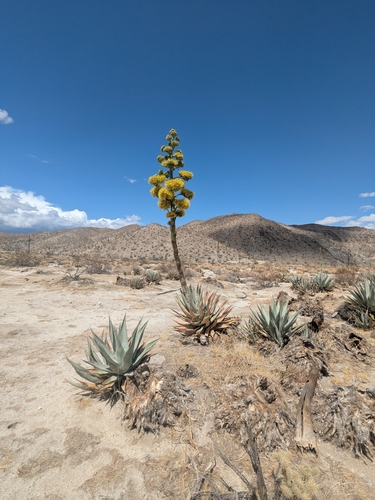
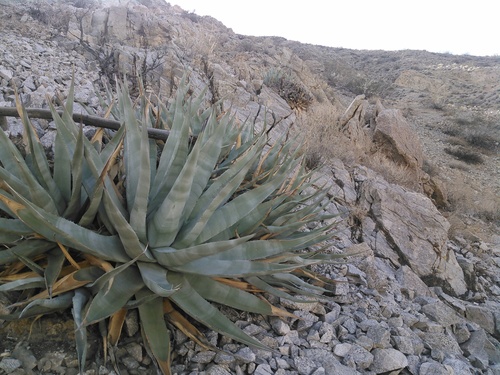
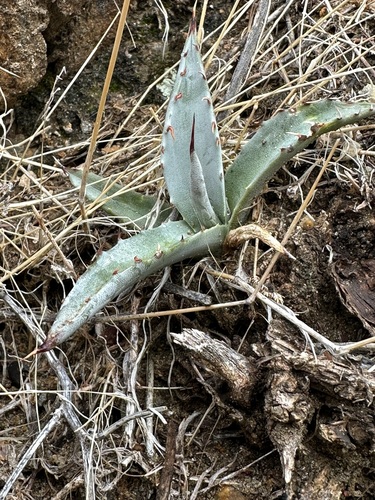
Desert Agave
Agave deserti
Care
full sun
very low
Fast; Typically decomposed granite. Tolerates sodic soil..
1–20ft tall , 3–3ft wide
Mar-Aug
Evergreen
Resistant
Hearts cooked like cactus; leaves fermented into traditional beverage
Colorado Desert and surrounding foothills of southern California in Riverside and San Bernardino Counties, below 3000 ft elevation, extending to Arizona and Sonora.
Care Guide
Planting
Plant Desert Agave in full sun in fast-draining, rocky soil - decomposed granite is ideal. Position it away from walkways and high-traffic areas since the leaves have sharp spines along the edges and tips that can cause injury. This is a slow-growing plant, so spacing depends on your desired mature size (1–20 feet), but give it room to spread as it grows in clusters. Plant in spring or fall when temperatures are mild.
After Planting
Water weekly for the first summer to establish the plant, then transition to very infrequent watering - once established, water no more than once a month during summer. Desert Agave is highly drought-adapted and requires minimal maintenance once established; the #1 mistake is overwatering, which can rot the roots in our Bay Area winters and spring rains. This plant is evergreen and tolerates cold down to 15°F, so it handles our climate well. Expect very slow growth in the first year; when the plant eventually blooms (likely years away), individual rosettes will die after flowering, but the cluster will continue producing new plants.
Endangered & Threatened Species Supported
California Species of Special Concern
Wildlife Supported
Insects

Caterpillar specialist on agave species; overwinters in leaf rosette
Specialized agave feeder; multi-year larval development in leaf bases

Endemic to desert agaves; larval development throughout growing season

Wood-boring larvae in flowering stalks and leaf bases
Birds

Early spring bloomer provides critical nectar during breeding season courtship displays

Weaves nests in agave flower stalks during breeding season

Primary nesting habitat in agave inflorescences April-June

Uses dense rosettes for shelter and foraging for insects

Uses tall agave flower stalks as perching and nesting substrate in desert scrub

Spring migrant foraging on insects in agave canopy