← Back to results

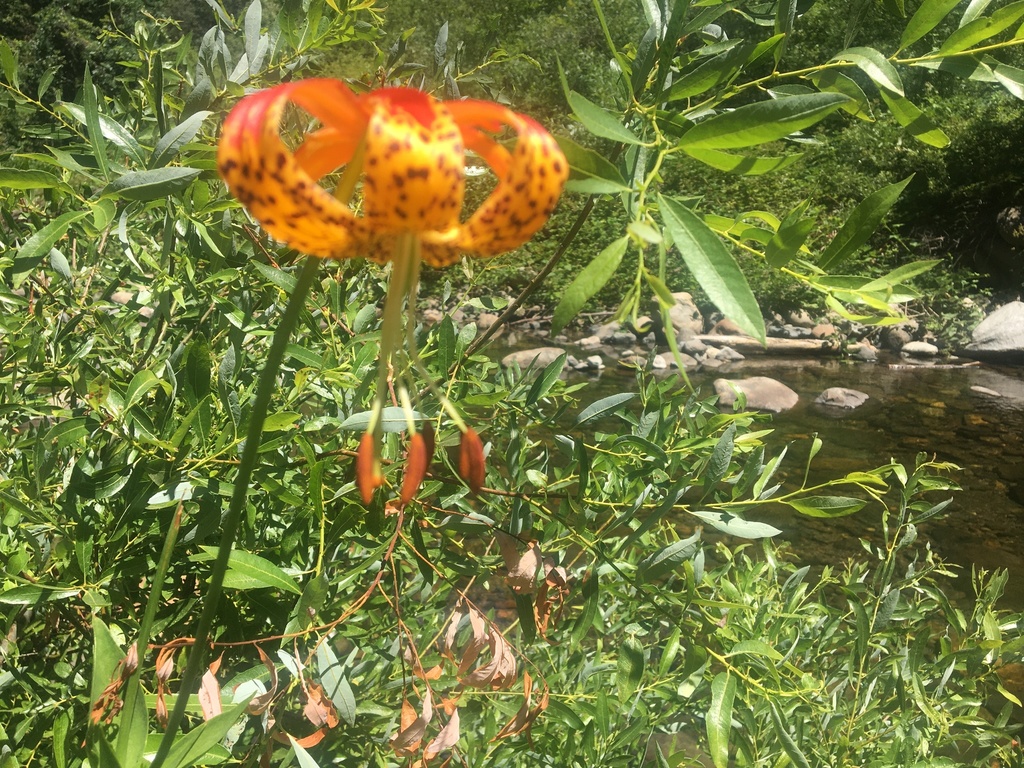
Leopard Lily

Lilium pardalinum subsp. pardalinum

geophyte View on Calscape

Care

Sun

part shade, full sun

Water

very low

Soil

Slow; Tolerates a variety of soils including clay and serpentine and acidic soils. Tolerates serpentine soil..

Size

7–8ft tall , 0–0ft wide

Bloom

Jun-Aug

Foliage

Deciduous

Flowers

Prized

Edible

Bulbs cooked and eaten as traditional Indigenous food

Native Range

Sierra Nevada meadows and riparian areas from Madera County to Kern County, 3000-6000 ft elevation.

Care Guide

Planting

Plant your leopard lily in fall or early spring in a spot with part shade to full sun. These bulbs prefer slow-draining soil and will tolerate clay, acidic, and even serpentine soils, so don't amend heavily - just plant where water naturally lingers rather than drains away fast. Space bulbs 12 inches apart since they cluster together on rhizomes and will fill in over time. Your plant will eventually reach 7–8 feet tall, so give it room and stake it if needed as it grows.

After Planting

Water weekly during your first summer after planting, then taper to once per week or less once established - these are low-water plants once their roots are in. Expect blooms in June through August of your first or second year. The plant is deciduous and will die back completely in fall; let it go dormant naturally and don't dig it up thinking it's dead. The biggest mistake is overwatering or planting in fast-draining soil - leopard lilies need moisture to thrive, not the dry conditions of typical ornamental lilies.

Visit Calscape for more information about Leopard Lily

Wildlife Supported

Birds

Nectar · Summer

Hummingbirds visit leopard lily flowers for nectar during blooming season

Insects

Larval Host · Year-Round

Fungal disease affecting lily tissues

Larval Host · Year-Round

Occasional use of lily species as larval host in California range

Larval Host · Year-Round

Fungal pathogen; disease pressure increases in wet conditions

Larval Host · Year-Round

Caterpillars feed on lily foliage during development

Larval Host · Year-Round

Larvae develop on lily host plants in Sierra foothills and coastal ranges

Larval Host · Year-Round

Caterpillars feed on lily foliage during larval development April-July

Larval Host · Year-Round

Caterpillars utilize lily plants as host during development

Where to Buy

East Bay Wilds

2110 Eighth St, Suite 202, Berkeley

Fri 9:30am-4pm (occasional Sat, call ahead)

1.5 mi (510) 409-5858 Website
Native Here Nursery

101 Golf Course Dr, Tilden Regional Park, Berkeley

Sat 10am-2pm

3.0 mi (510) 549-0211 Website