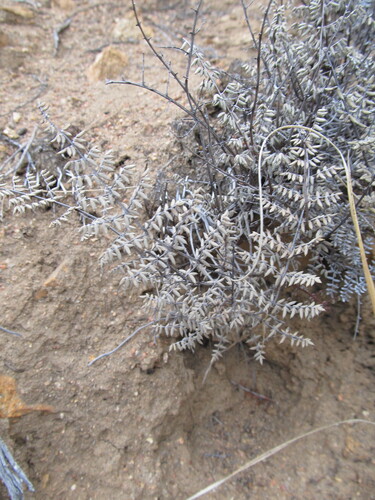
Birdfoot Cliffbrake
Pellaea mucronata var. mucronata
Care
part shade
very low
Fast; Prefers well drained rocky or gravelly soil.
0–0ft tall , 1–1ft wide
Deciduous
Resistant
Friendly
Widespread in California on dry rocky slopes and cliffs from sea level to 6000 ft elevation.
Care Guide
Planting
Plant your Birdfoot Cliffbrake in partial shade with fast-draining, rocky or gravelly soil - this is non-negotiable, as poor drainage will kill it. Space it where water won't collect around the base, and fall through early spring is your best planting window in the Bay Area. This fern is deciduous, so don't be alarmed when it dies back seasonally.
After Planting
Water twice monthly maximum during your first summer, then taper off to minimal water once established. Birdfoot Cliffbrake is extremely heat and cold tolerant (down to -5°F), so once it settles in, you can largely ignore it - the biggest mistake is overwatering or planting it in regular garden soil instead of rocky, well-draining mixes. No pruning needed; just let it do its thing in rock gardens or containers.
Visit Calscape for more information about Birdfoot Cliffbrake
Endangered & Threatened Species Supported
California Species of Special Concern; Declining due to disease and habitat loss
California Species of Special Concern due to habitat loss and localized population declines
Wildlife Supported
Amphibians

seeks shelter under fern fronds in moist rocky habitats during active season
Insects
herbivorous beetle feeding on fern fronds during growing season

utilizes dense fern fronds and litter for refuge and overwintering
Mammals

nests and shelters in dense fern clumps within chaparral and oak woodland
Reptiles

uses fern cover and moist microhabitats for thermoregulation and prey hunting