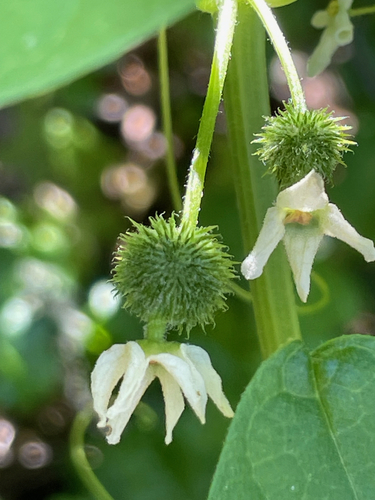
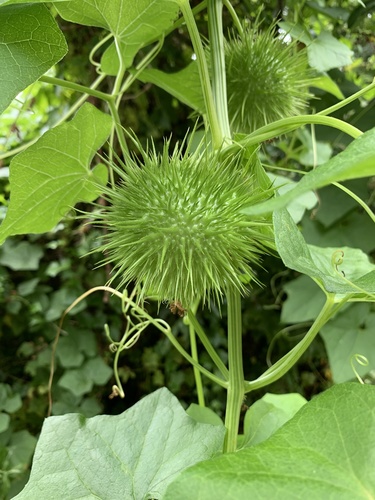
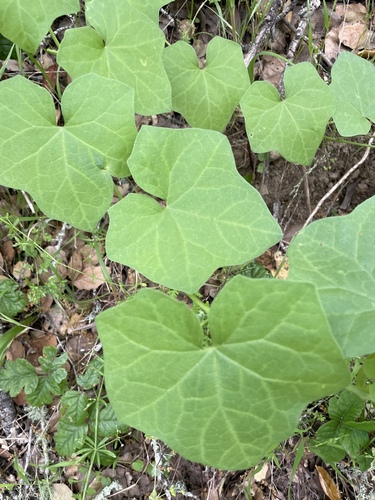
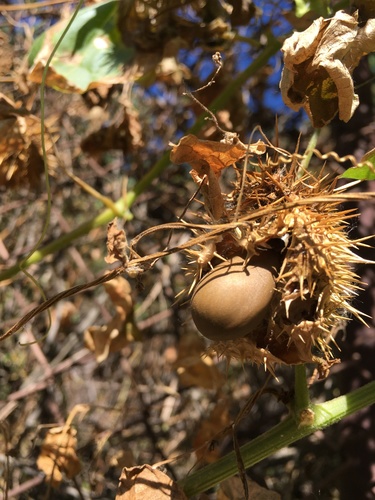
California Manroot
Marah fabacea
Care
full sun
very low
Fast; Adaptable.
18–18ft tall
Mar-May
Deciduous
Prized
Interior valleys and foothills of central California from the Sacramento Valley to the southern Sierra Nevada, below 3000 ft elevation.
Care Guide
Planting
Plant California Manroot in full sun in a location where it can climb or sprawl up to 20 feet. It thrives in fast-draining, adaptable soil and requires no special soil preparation. Plant in late fall or early winter to take advantage of the increased rainfall that triggers vine growth, or start from seed with no pre-treatment needed.
After Planting
Water very sparingly once established - this plant is drought-tolerant and actually goes dormant in summer, so expect the vines to disappear during hot months. The #1 mistake is overwatering: let the soil dry out completely between waterings, especially after the spring blooming season (March–May). You'll see vigorous growth in late winter and spring as vines rapidly extend, then the plant will naturally die back as temperatures rise - this is normal behavior, not a sign of trouble.
Visit Calscape for more information about California Manroot
Endangered & Threatened Species Supported
California Threatened; Species of Special Concern
Wildlife Supported
Insects

Caterpillars utilize vine foliage as larval host plant

Larvae feed on vine foliage in spring through early summer

Predatory beetle uses vine structure for hunting and shelter

Caterpillar host plant in early spring

Foraging resource during spring bloom period

Feeds on vine sap and developing fruits in summer months

Uses vine foliage and structure for foraging and overwintering

Early spring larval host plant for this native California butterfly
+2 more species
Arachnids

Hunts arthropods on vine foliage and uses structure for web construction
Mammals

Cache seeds in fall for winter food stores