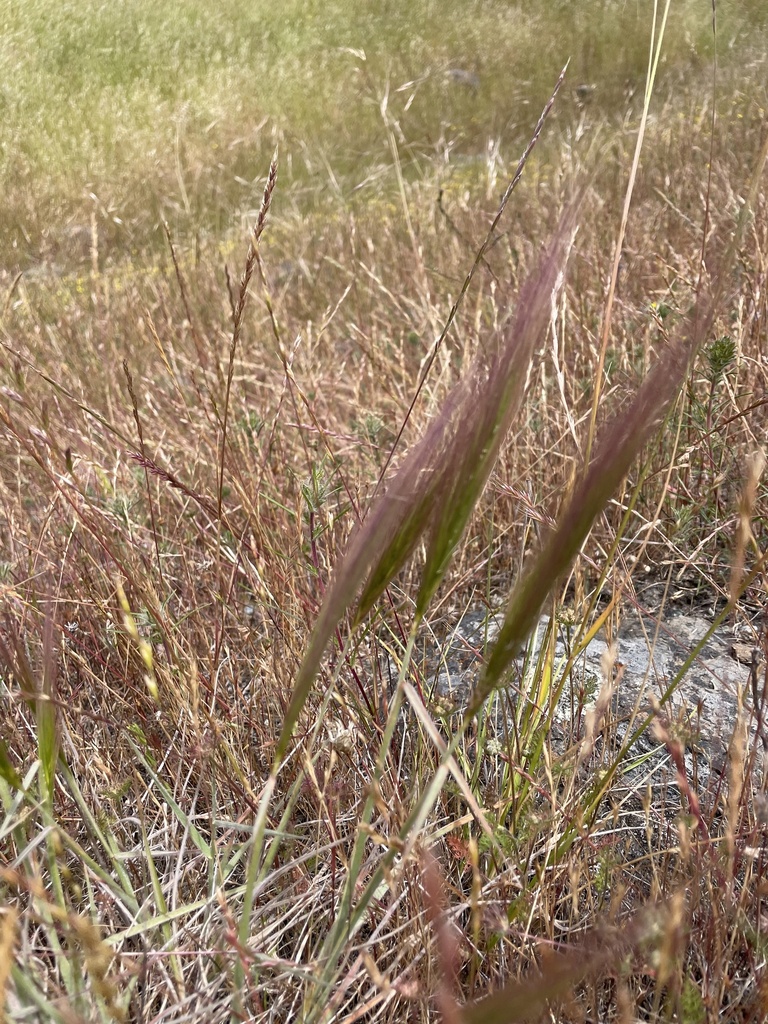
Big Squirreltail
Elymus multisetus
full sun
very low
Fast; . Tolerates serpentine soil..
2–2ft tall, 1–2ft wide
Deciduous
Resistant
Friendly
Grasslands and shrublands in interior California and the Sierra Nevada, typically at 1,000-7,000 ft elevation
Planting
Plant Big Squirreltail in full sun and fast-draining soil - it's even tolerant of serpentine soil if that's what you're working with in your Bay Area garden. Since this is a perennial grass native to the western U.S., plant it in fall or early spring when soil moisture is naturally higher. The plant reaches about 2 feet tall, so give it room to spread without crowding.
After Planting
Big Squirreltail is extremely drought-tolerant once established, requiring only very low water - think of it as a set-it-and-forget-it plant once it's settled in. This is a deciduous grass, so expect it to die back seasonally; resist the urge to water it during dormancy. The biggest mistake Bay Area gardeners make is overwatering: if your soil drains fast and you've planted in full sun, your new squirreltail will thrive on rainfall alone after the first season.
Birds
Primary seed forager in coastal sage scrub and grassland habitats where Elymus occurs
Staple seed food resource; important for winter survival and breeding season
Important seed resource during fall migration and winter; primary forage in chaparral and grassland
Insects
Larvae feed on Elymus species in spring; critical early season host plant
Fungal pathogen affects seed heads and tillers
Mammals
Spring growth provides nutritious forage when other vegetation is limited
