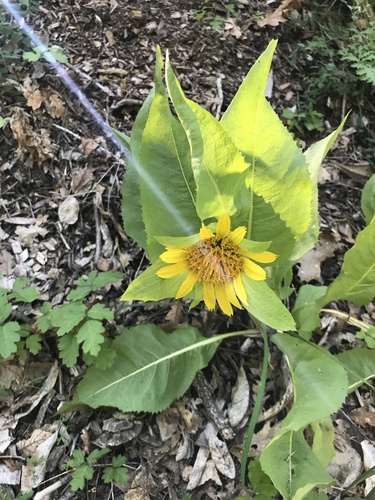
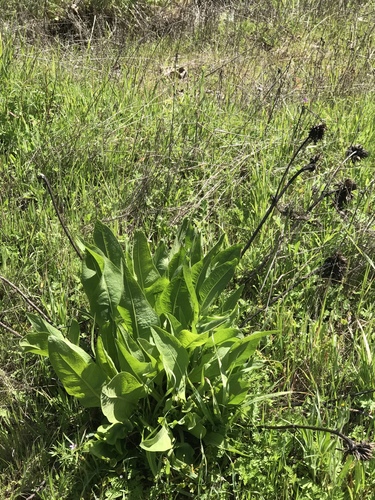
Coast Range Mule-ears
Wyethia glabra
Care
1–1ft tall
Friendly
Prized
Oak woodlands and grasslands of the Coast Ranges from Sonoma to San Luis Obispo County, 500-2500 ft elevation.
Care Guide
Planting
Plant Coast Range Mule-ears in well-draining soil in an open, sunny location - this California native thrives in the chaparral and mixed evergreen forests of the Coast Ranges where it grows in full light. Space plants to accommodate their mature height of about 12 inches, and note that they develop from a tough, deep taproot, so choose a location where you won't need to relocate them later. Plant in fall or early winter to take advantage of the rainy season and allow the plant to establish before summer.
After Planting
Once established, Coast Range Mule-ears is a low-maintenance perennial that prefers drier conditions typical of its native habitat. The biggest mistake is overwatering - this plant is adapted to California's dry summers and doesn't need supplemental water once its taproot is established, so avoid the urge to coddle it. Expect the plant to bloom with showy yellow flowers, and let it self-seed if you want more plants; minimal pruning is needed beyond removing spent flower heads if desired.
Visit Calscape for more information about Coast Range Mule-ears
Endangered & Threatened Species Supported
Federal Threatened; California Endangered; Species of Special Concern
California Species of Special Concern
Wildlife Supported
Insects

Larvae feed on foliage in early spring; critical host plant for this subspecies in California

Early spring larval host plant

Larval host plant; caterpillars feed on leaves during spring emergence

Larval host plant utilized in spring for reproduction

Pollinator; forages on flowers for pollen and nectar

Feeds on plant foliage; presence indicates plant as part of local herbivory complex
Forages on flowers during spring foraging season

Forages on flowers for pollen and nectar throughout active season