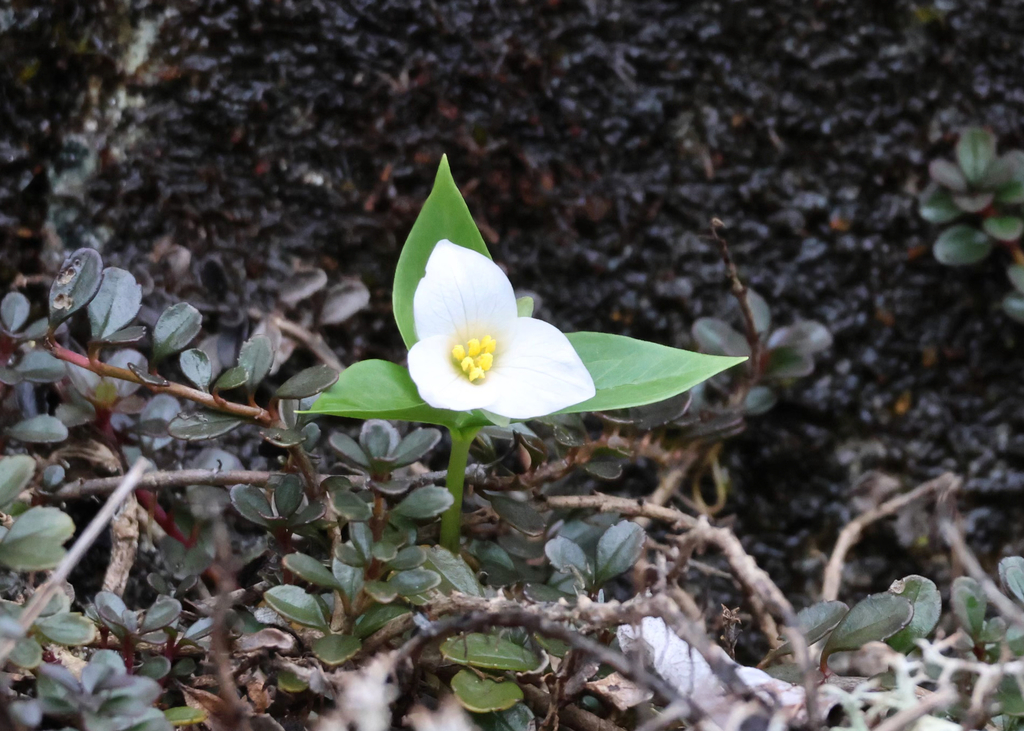
Coast Trillium
Trillium ovatum subsp. ovatum
Care
part shade
moderate
0–2ft tall
Jan-Dec
Friendly
Prized
Moist forests and woodlands of the North Coast Ranges from Mendocino to southern Humboldt County, below 3000 ft elevation, extending to Oregon and Washington.
Care Guide
Planting
Plant your Coast Trillium in partial shade to deep shade - it thrives under the dappled light of redwoods and mixed evergreen forests. Choose a spot with moist, well-draining soil on a slope or in a canyon-like setting if possible, mimicking its native Pacific Northwest habitat. Space plants about 12–18 inches apart to allow room for the slow spread via underground rhizomes. Plant in fall or early spring when the soil is naturally moist.
After Planting
Water moderately to keep soil consistently moist during the growing season and first year after planting. Expect Coast Trillium to be a slow grower - it spreads gradually through rhizomes, so patience is key; don't expect a large patch in year one. The plant is deciduous and will die back after flowering in spring or winter, which is completely normal. The #1 mistake is overwatering or planting in poorly draining soil, which causes rhizome rot; ensure water drains away rather than pooling around the plant.
Wildlife Supported
Insects
Early spring forager on trillium flowers during colony establishment
Seed predation on developing trillium fruits
Spring blooms provide early season nectar for emerging colonies
Spring pollinator attracted to trillium flowers
Fungal disease affecting reproductive structures during spring emergence
Herbivory on emerging spring foliage
Arachnids
Ambush predator utilizing trillium flowers to hunt pollinators