← Back to results

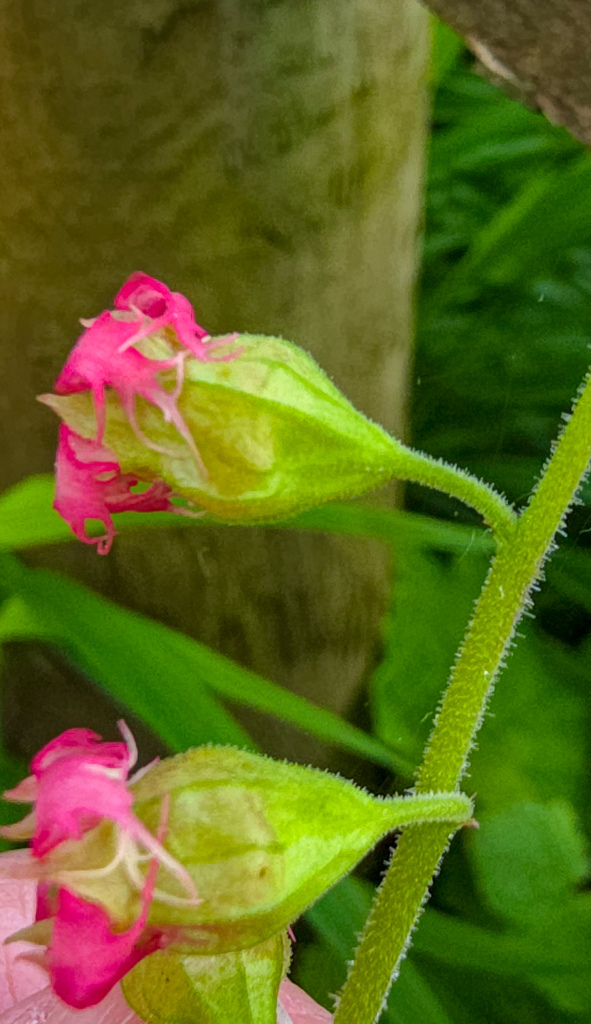
Fringecups

Tellima grandiflora

perennial herb View on Calscape

Care

Sun

part shade

Water

moderate

Soil

Medium; Forest soil with high organic content.

Size

1–3ft tall , 2–2ft wide

Bloom

Mar-Aug

Foliage

Deciduous

Deer

Resistant

Container

Friendly

Flowers

Prized

Native Range

Redwood forests and moist woodland understory of the North Coast Ranges from Humboldt to Sonoma County, below 3000 ft elevation, extending to Oregon.

Care Guide

Planting

Plant Fringecups in part shade to deep shade - it thrives in the moist, shaded understory of woodland gardens and won't be happy in full sun. Choose a spot with medium-draining soil rich in organic matter, similar to forest soil; amend heavily with compost if your garden soil is lean or compacted. Space plants about 1–2 feet apart if you're using them as a groundcover. Plant in fall or early spring to give roots time to establish before summer.

After Planting

Water weekly for the first summer, then taper to once weekly or less once established, since this plant only needs moderate water and can get by with minimal summer irrigation. Don't fuss with pruning - just remove dead leaves in late winter before new growth emerges. Year one is about establishment; the plant will bloom spring through August with delicate red, pink, or white flowers once settled in. The biggest mistake is overwatering or planting in sun; Fringecups will sulk and decline if kept too wet or exposed, so err on the side of drier and shadier than you think.

Visit Calscape for more information about Fringecups

Wildlife Supported

Birds

Nectar · Year-Round

Primary nectar source in coastal redwood and mixed evergreen forests; supports early breeding season (Dec-Jun)

Insects

Larval Host · Summer

Larval host plant; larvae develop on reproductive tissues

Pollen · Spring

Critical spring forage for endangered subspecies in northern California coastal regions

Pollen · Spring

Early season pollen and nectar source for colony establishment in coastal California

Pollen · Spring

Spring forage resource in Pacific Northwest and northern California populations

Pollen · Spring

Early-season foraging in shaded forest understory habitats

mod Hover Fly
Pollen · Spring

Adult hover fly foraging on early spring flowers

Larval Host · Spring

Larvae mine foliage in spring and early summer

Pollen · Spring

Early season bumble bee forage in montane and coastal regions

Where to Buy

East Bay Wilds

2110 Eighth St, Suite 202, Berkeley

Fri 9:30am-4pm (occasional Sat, call ahead)

1.5 mi (510) 409-5858 Website
Native Here Nursery

101 Golf Course Dr, Tilden Regional Park, Berkeley

Sat 10am-2pm

3.0 mi (510) 549-0211 Website
Curious Flora

12040 San Pablo Ave, Richmond

Daily 9am-4pm

7.0 mi (510) 215-3301 Website