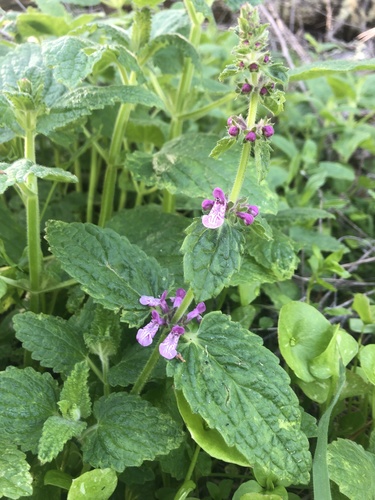
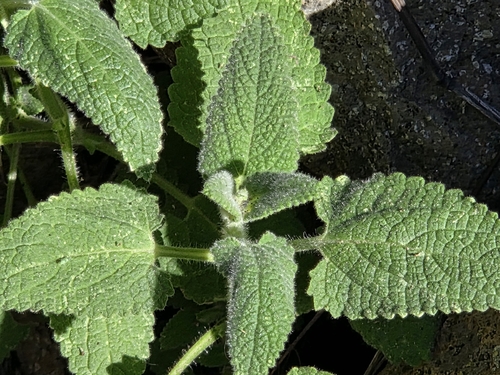
California Hedgenettle
Stachys bullata
Care
part shade
moderate
Slow, Standing; Tolerates a variety of soils as long as adequate water is present.
1–3ft tall
Mar-Nov
Evergreen
Resistant
Friendly
Yes
Prized
Tubers eaten cooked; traditional Indigenous food source
Chaparral and oak woodlands of the Coast Ranges from Napa to Monterey County, 500-3000 ft elevation.
Care Guide
Planting
Plant California Hedgenettle in partial shade to deep shade in spring or fall. It thrives in damp to wet soil and tolerates clay, so choose a spot that stays consistently moist - think bioswales, pond margins, or low-lying areas where water lingers. Space plants 1–2 feet apart since this evergreen spreads to fill available damp space. Unlike drought-tolerant natives, this plant needs moisture to thrive, so avoid hot, dry spots.
After Planting
Water weekly for the first summer to establish the plant, then reduce to once weekly or less during dry spells once established. California Hedgenettle is evergreen and will keep its deep green leaves year-round, flowering from spring through summer with purple or pink blooms. The #1 mistake is planting it in dry soil or letting it dry out - this is a wetland plant that wants damp conditions to perform well. It spreads readily but is easily controlled by removing growth where you don't want it.
Visit Calscape for more information about California Hedgenettle
Endangered & Threatened Species Supported
Vandyk's bumblebee; California state endangered; species of special concern
Wildlife Supported
Insects

Early season forager for queen establishment and colony initiation

Larval host plant supporting multiple generations in California coastal areas

Multiple Lasioglossum species forage on spring flowers for nectar and pollen

Larval food plant; caterpillars feed on foliage multiple generations annually

Spring to early summer flower visitation for pollen and nectar

Native bee specialist on Lamiaceae flowers during spring emergence

Supplementary spring forage for managed and feral colonies

Native solitary bee genus foraging during spring and early summer
+5 more species