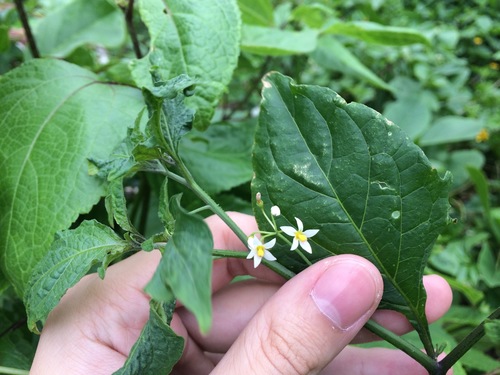
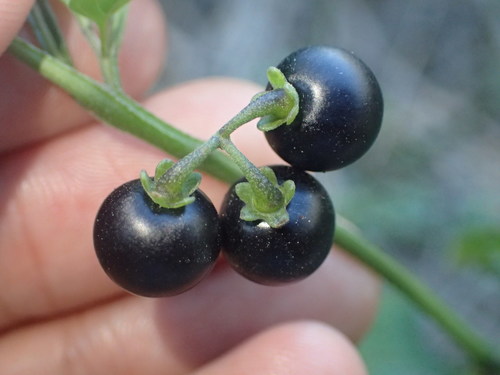
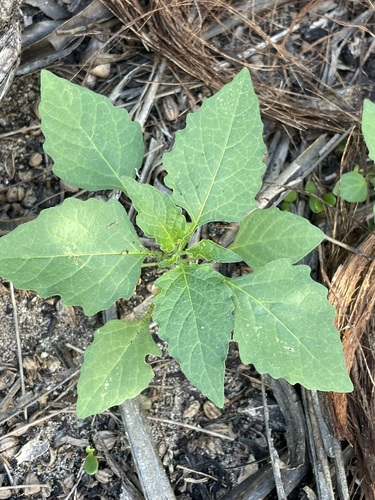
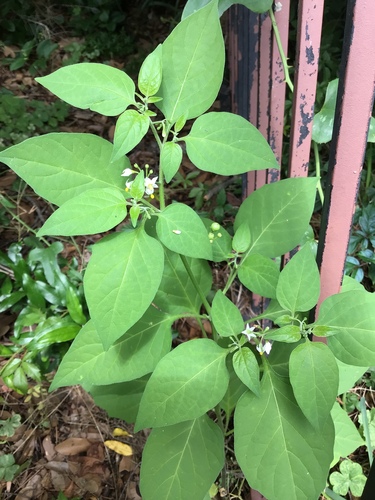
American Black
Solanum americanum
Care
full sun
moderate
3–5ft tall
Friendly
Berries eaten cooked; traditional Indigenous food when properly prepared
Disturbed areas, chaparral, and oak woodlands throughout much of California south of the North Coast Ranges, below 4000 ft elevation.
Care Guide
Planting
Plant American Black Nightshade in full sun, where it will thrive in the Bay Area's Mediterranean climate. This native plant tolerates a wide range of soil conditions and actually prefers disturbed or open spaces, so it's forgiving about placement - even in challenging garden spots where other plants struggle. Plant in spring or early summer to give it the full growing season, spacing plants about 2-3 feet apart since they can reach 3-5 feet tall.
After Planting
Water moderately during the first summer to establish the plant, tapering off as it matures since it's adapted to natural rainfall patterns. American Black Nightshade is an annual or short-lived perennial, so expect it to bloom, set its shiny black berries (which birds love), and potentially self-seed or decline after its first year or two - this is normal behavior, not a sign you've failed. The biggest mistake Bay Area gardeners make is overwatering; this plant evolved in disturbed, often dry places, so less water is better than more. Keep all parts of the plant away from children and pets, as it's toxic if ingested.
Wildlife Supported
Birds

Important migrant staging food, critical late summer-fall

Winter resident, seeds important cold-season resource

Regular food source, especially winter months
Insects

Multi-generational pest, feeds on Solanum foliage

Spring-summer infestations on young growth

Larval host, caterpillars feed on Solanum leaves

Phloem feeder on plant tissues, year-round host

Polyphagous pest, larvae feed on Solanum species

Larval host plant, multiple generations per season
Mammals

Opportunistic frugivore during fruiting season