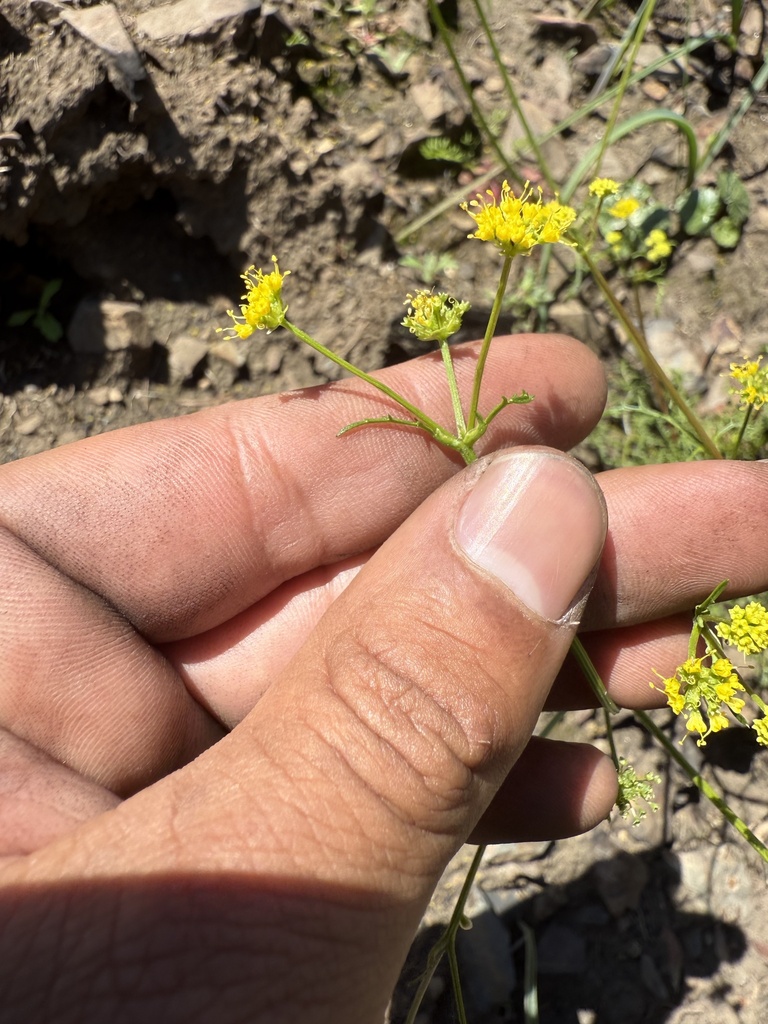
Turkey Pea
Sanicula tuberosa
Care
full sun, part shade
Fast
3–3ft tall
Friendly
Tubers eaten raw or roasted; traditional Indigenous food
Grasslands and oak woodlands throughout central California from the Coast Ranges to the Sierra Nevada foothills, below 3000 ft elevation.
Care Guide
Planting
Plant your Turkey Pea in full sun with fast-draining soil - it's a Bay Area native that thrives in the gravelly, well-drained conditions of chaparral and foothill woodlands. The best time to plant is in fall or early winter when the rainy season begins, giving the tuber time to establish before summer drought. Space plants to allow for their slender stems, which can reach up to 80 centimeters tall.
After Planting
Water regularly during the first growing season to help the tuber establish, then taper off as the plant matures and becomes drought-tolerant like other California natives. Turkey Pea is adapted to dry summers and will likely go dormant or decline without supplemental water during hot months, so plan for summer irrigation or let it rest naturally if you prefer a low-maintenance approach. Avoid the temptation to overwater or amend the soil - this plant evolved in lean, fast-draining conditions and will rot in rich, wet soil.
Endangered & Threatened Species Supported
Brush rabbit is a Species of Special Concern
Wildlife Supported
Insects
early season pollen source for native bees emerging from hibernation
fungal pathogen overwinters on plant tissues, sporulation spring through fall
adult feeding on pollen during flowering period
larval feeding on emerging foliage during spring growth
Mammals
seed collection and caching for winter food stores
spring and early summer browse on tender new growth