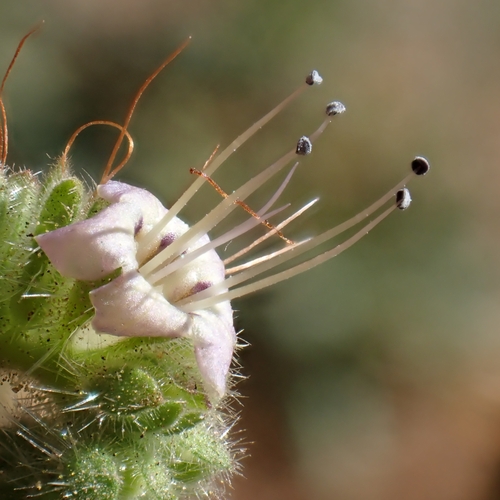
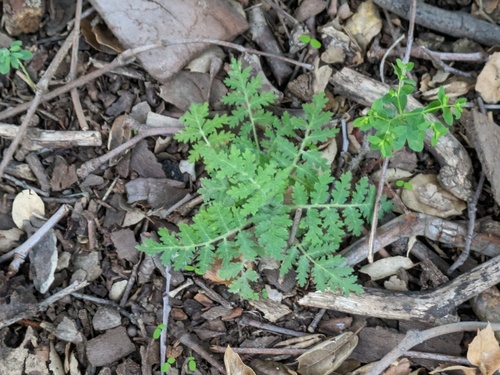
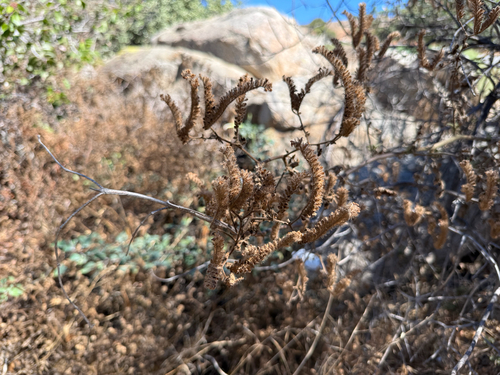
Branching Phacelia
Phacelia ramosissima
Care
part shade
low
Fast, Standing; Prefers sand or sandstone.
1–4ft tall , 2–2ft wide
Mar-Aug
Deciduous
Resistant
Friendly
Prized
Dry hillsides and washes of the Sierra Nevada foothills and inland areas from Kern County to Modoc County, below 5000 ft elevation, extending to Oregon and Nevada.
Care Guide
Planting
Plant Branching Phacelia in fast-draining soil - ideally sandy or sandy loam - in a spot with partial shade. Space plants according to their mature spread, keeping in mind they can sprawl up to 4 feet wide. Spring is your best planting window to give them time to establish before summer. Make sure water doesn't pool around the base; this plant despises wet feet and needs excellent drainage to thrive.
After Planting
Water weekly during your first summer, then taper off as the plant establishes - by year two, it should thrive on rainfall alone. Branching Phacelia will bloom from spring through summer (March to August) with minimal fussing; deadheading spent flowers will encourage more blooms, but it's not essential. In winter, the plant goes deciduous and dormant, which is completely normal - don't panic when it disappears. The #1 mistake is overwatering: resist the urge to baby it, since this California native prefers dry conditions and will rot if kept too wet.
Visit Calscape for more information about Branching Phacelia
Endangered & Threatened Species Supported
California Species of Special Concern; monarch populations declining
Wildlife Supported
Insects

Spring nesting season pollen source

Early season foraging for queen establishment and colony growth

Pollen and nectar source sustaining predatory populations controlling pests

Critical larval food provision during spring nesting period

Spring pollen collection for brood provisioning

Early spring foraging during colony initiation

Primary pollen source for early colony development

Spring foraging during ground nesting season
+4 more species
Birds

Early spring migration fuel and breeding season resource