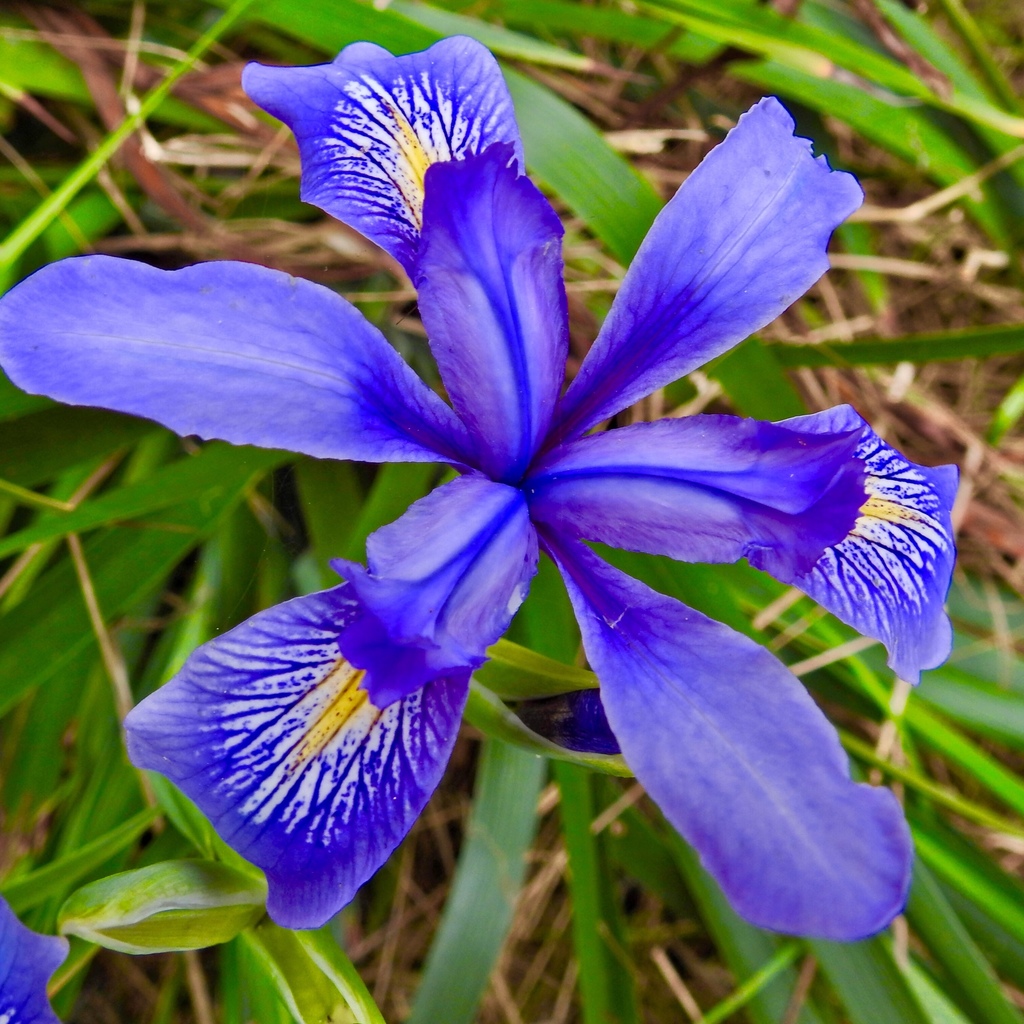
Douglas Iris
Iris douglasiana
Care
full sun, part shade
very low
well-drained; tolerates clay; no summer water
0–1ft tall , 1–2ft wide
Mar-May · blue, purple, lavender, white
Evergreen
Resistant
Friendly
Prized
Coastal California from Santa Barbara to southern Oregon
Elegant iris flowers in shades of blue, purple, and white
Hybridizes easily with other Pacific Coast irises; many garden selections
Care Guide
Planting
Plant your Douglas Iris in part shade to full sun in soil rich with organic matter - it prefers heavy soils and tolerates clay well. Space plants to allow room for clumping growth, as they naturally form dense mounds. Plant in fall or winter to take advantage of the rainy season for establishment. Avoid sites with summer water from irrigation unless you're in an inland area; if you're near the coast, this plant thrives on fog and cooler temperatures with minimal supplemental water.
After Planting
Water every 2 to 4 weeks during summer if you're not in a coastal area or near a naturally wet spot; established plants need water only about once a month maximum. Once established, you can dramatically reduce summer watering, especially if fog and coastal influence are part of your microclimate. This is an evergreen groundcover that requires minimal pruning - just remove dead foliage as needed. The #1 mistake is overwatering: Douglas Iris is tougher than it looks and prefers drier conditions than most gardeners expect.
Wildlife Supported
Insects
Larval host plant; evergreen foliage supports multiple generations
Spring bloom visitor Mar-May, foraging for queen and worker nutrition
Early spring forager Mar-May during bloom, critical for colony establishment
Spring pollen feeder during bloom period Mar-May, aphid predator in iris patches
Spring bloom nectar source Mar-May in coastal scrub habitat
Spring nectar source Mar-May during early colony build-up
Adult nectar foraging during spring bloom Mar-May
Birds
Early spring nectar source Mar-May, coincides with breeding season territory establishment
Spring migration stopover nectar source Mar-Apr in coastal California