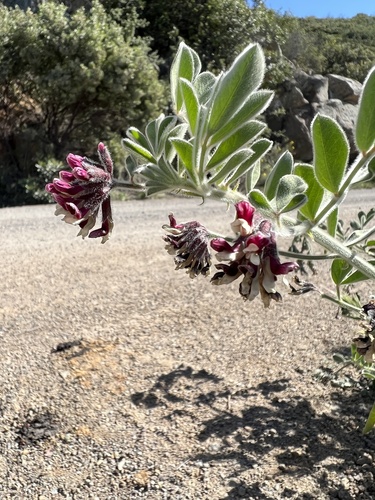
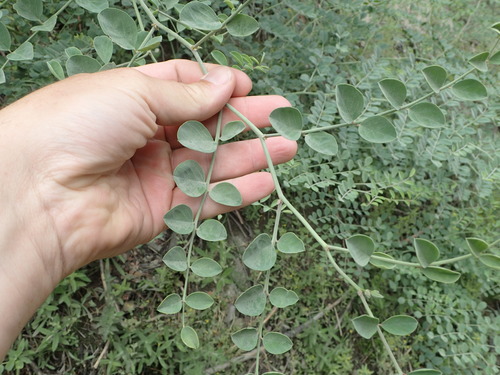
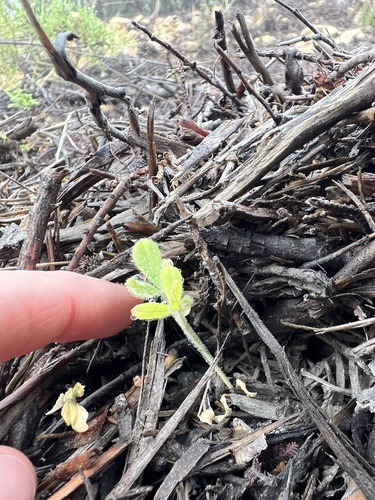
Big Deervetch
Hosackia crassifolia var. crassifolia
Care
full sun, part shade
Fast; Common in disturbed, impoverished soil but does best on fine- to medium-textured, well-drained soil.
2–5ft tall
Mar-Aug
Friendly
Grasslands and meadows of the Inner Coast Ranges and foothills from Marin County to Monterey County, below 2000 ft elevation.
Care Guide
Planting
Plant Big Deervetch in full sun with fast-draining soil - it thrives in fine- to medium-textured, well-drained conditions and actually tolerates poor, disturbed soil. Space plants according to their mature size of 2–5 feet tall, and plan to plant in spring during the growing season. This legume is long-lived and somewhat bushy, so give it room to develop its straight stems and spreading form.
After Planting
Water weekly during your first summer to establish the plant, then taper off as it matures - Big Deervetch is adapted to surviving on less water once established. Expect blooms from March through August, with pink-and-yellow or yellow pea flowers followed by brownish pods. The biggest mistake Bay Area gardeners make is overwatering; this plant's preference for fast drainage means soggy soil will kill it faster than drought, so err on the side of dry once it's past year one.
Endangered & Threatened Species Supported
California listed as Threatened
Wildlife Supported
Birds

Early spring arrival; important pre-migration and breeding season nectar source
Insects

Early season flight; larvae develop on host plant foliage

Larvae feed on plant foliage; univoltine or bivoltine depending on location

Spring emergence; primary nectar source during early season

Early season forager on legume flowers; colony establishment diet

Spring foraging on available legume resources
Legume specialist; larval development on host foliage

Polyphagous legume specialist; multiple generations spring through fall

Early season forage source; pollen and nectar collection
+3 more species