Alkali Seaheath
Frankenia salina
Care
full sun
very low
Fast, Medium, Slow, Standing; Prefers sand or sandstone.
1–1ft tall
Mar-Nov
Deciduous
Resistant
Friendly
San Francisco Bay Area and interior valleys, particularly in alkaline wetlands and salt marshes around the bay, below 100 ft elevation.
Care Guide
Planting
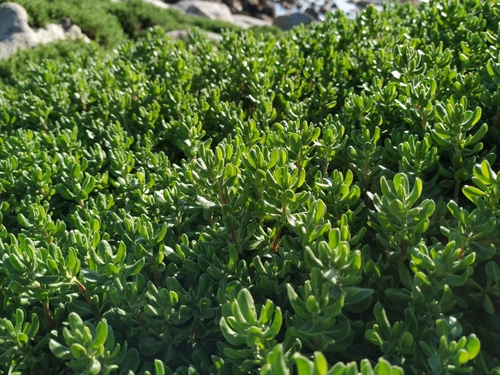
Plant Alkali Seaheath in full sun in sandy or sandstone soil with fast drainage - it thrives in poor, saline, or alkaline soils where many plants struggle. Space plants to account for their spreading habit via rhizome, keeping in mind they'll form a low, twiggy groundcover rather than a tall shrub. Plant in spring for best establishment, and this California native is hardy to 25°F, so Bay Area winters won't stress it.
After Planting
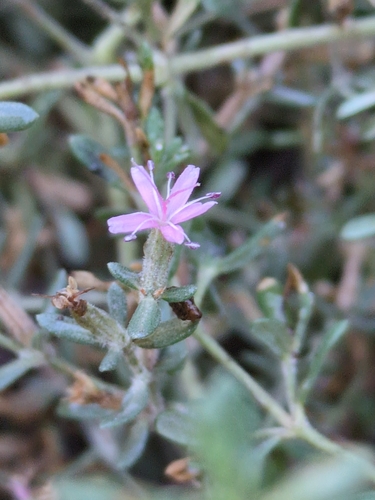
Keep the soil moist during the first summer after planting to help establish the plant, then transition to very low water once it's settled in - this is a drought-tolerant native that needs minimal irrigation. Year one will show you a low, spreading mat; the plant blooms from March through November with white, pink, or fuchsia flowers. The biggest mistake is overwatering: this plant evolved to handle salt flats and saline conditions, so err on the dry side once established.
Endangered & Threatened Species Supported
California Endangered Species Act listed
California Species of Special Concern
Western Pygmy Blue butterfly; California species of special concern
Wildlife Supported
Birds

Critical winter staging resource during Pacific Flyway migration Dec-Feb

Primary forage in coastal salt marshes and alkaline wetlands where Frankenia dominates

Year-round resident in California alkaline and coastal wetlands

Winter resident utilizing coastal saline habitats Nov-Mar

Fall migration stopover feeding in coastal salt marshes

Winter migrant in California coastal and alkaline marshes
Insects

Parasitic host relationship; primary nutrient source

Spring-early summer queen and worker foraging

Host plant for larval development; multiple broods spring-summer

Spring emergence and early season foraging in saline habitats

Spring adult nectar source in coastal salt marsh habitats

Spring-summer nectar source during adult flight season

Summer nectar foraging during peak flight period

Summer-fall nectar resource for multiple broods
+1 more species