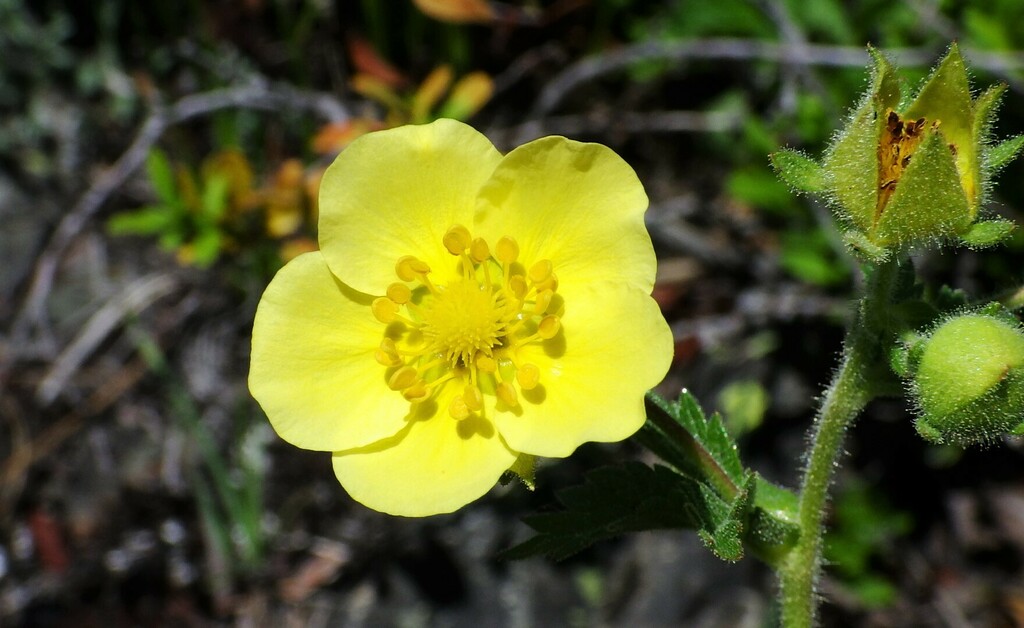
Douglas' Drymocallis
Drymocallis glandulosa
Care
part shade, full sun
low
Fast, Medium, Slow; Adaptable.
2–2ft tall , 1–1ft wide
Mar-Nov
Deciduous
Friendly
Prized
Sierra Nevada and adjacent ranges from Inyo County north to Modoc County, between 4000-10000 ft elevation in dry meadows and open forest.
Care Guide
Planting
Plant Douglas' Drymocallis in full sun or partial shade - it's adaptable to both. It tolerates any soil drainage (fast, medium, or slow) and is flexible about soil type, so amend minimally and focus on good drainage if you have heavy clay. Plant in spring or fall when the Bay Area soil is cool and moist. Space plants 1-2 feet apart since they form spreading clumps similar to strawberries.
After Planting
Water weekly through your first summer to establish the plant, then taper off to once or twice a month during summer once it's established - this is a low-water plant that doesn't need much once rooted. Expect the plant to go dormant and drop its leaves in winter, which is completely normal; don't panic or keep watering. The #1 mistake is overwatering: this native thrives on minimal summer irrigation, and wet soil in winter will rot the roots, so let the soil dry out between waterings and especially dial back water in fall.
Visit Calscape for more information about Douglas' Drymocallis
Endangered & Threatened Species Supported
California endemic, population decline from disease and habitat loss
Kirtland's bumblebee, extirpated from much of range
Wildlife Supported
Insects
Caterpillar food plant for spring/early summer broods
Alpine and subalpine populations mid-summer
Early season queen foraging and colony establishment
Western montane spring foraging
Montane population early season resource
Spring specialist forager
Early foraging for colony initiation
Spring foraging generalist
+6 more species