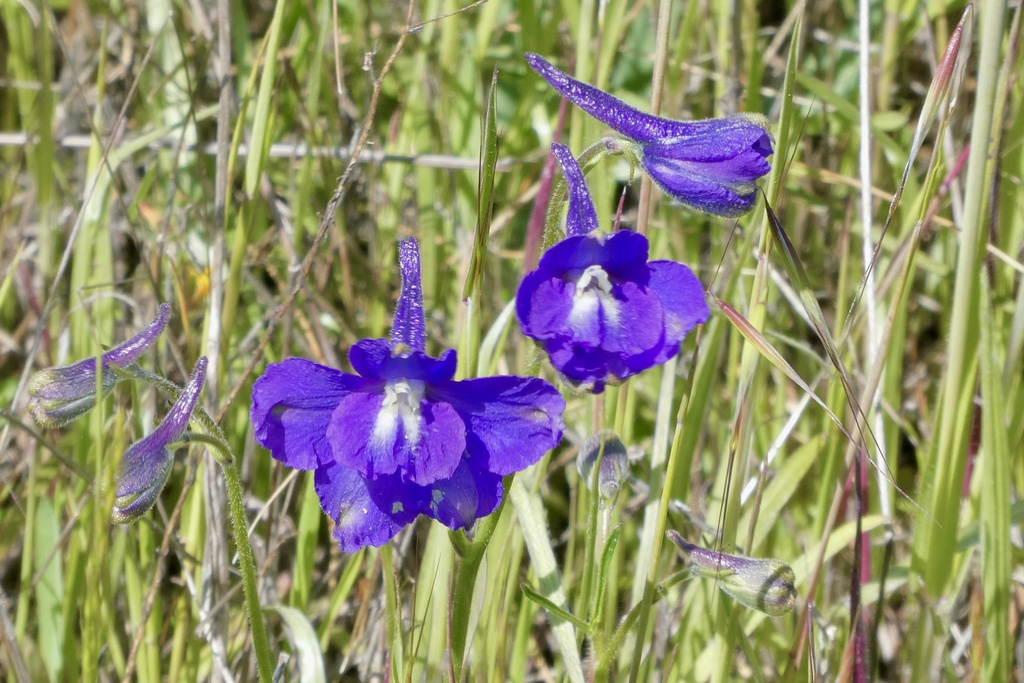
Royal Larkspur
Delphinium variegatum subsp. variegatum
Care
full sun, part shade
low
2–3ft tall
Mar-May
Friendly
Prized
Coastal Ranges and foothills from Sonoma County south to Santa Barbara County, below 2000 ft elevation in grassland and oak woodland.
Care Guide
Planting
Plant Royal Larkspur in full sun in spring, choosing an open, grassy location that mimics its natural California grassland and oak woodland habitat. This wildflower prefers low-water conditions, so ensure your site has well-draining soil and avoid areas that stay wet. Space plants about 12-18 inches apart to accommodate their mature height of 2-3 feet, and consider pairing them with other native plants like Calochortus species for a naturalistic planting scheme.
After Planting
Water regularly during the first growing season to establish roots, then transition to the low-water maintenance schedule this plant requires once established. Royal Larkspur blooms March through May, and you can deadhead spent flowers to encourage a fuller display, though leaving some seed heads will allow natural reseeding. The biggest mistake Bay Area gardeners make is overwatering - this is a drought-tolerant wildflower that actually prefers dry conditions once established, so err on the side of underwatering rather than risking root rot.
Wildlife Supported
Insects
Nectar and pollen source during early bloom period
Primary larval host plant for spring brood development
Larval food plant for early season caterpillars
Larval feeding on plant foliage during growing season
Fungal pathogen affecting reproductive structures during flowering
Important early-season nectar source for hive development
Caterpillars feed on plant foliage during larval development