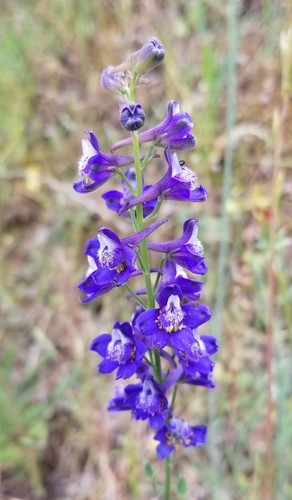
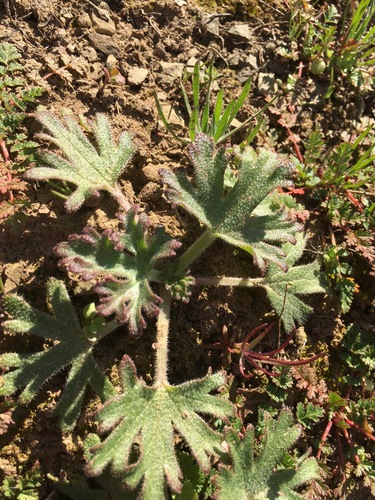
Coast Larkspur
Delphinium hesperium subsp. hesperium
Care
full sun, part shade
2–3ft tall
Friendly
Prized
Coastal bluffs and grasslands from Mendocino County south to San Mateo County, below 1000 ft elevation in coastal scrub and grassland.
Care Guide
Planting
Plant Coast Larkspur in full sun to part shade in fall or winter, when the plant can establish roots before the growing season. This California native wildflower grows 2 to 3 feet tall, so give it space to reach its mature height without crowding neighboring plants. The Calscape data doesn't specify soil or drainage requirements, so observe your existing garden conditions - this is a wildflower adapted to Northern California woodlands and grasslands, so it's likely flexible with local soils.
After Planting
Water regularly during your plant's first growing season to help it establish, then gradually reduce watering as it matures - Coast Larkspur is a wildflower adapted to California's dry summers and should be fairly drought-tolerant once established. The biggest mistake gardeners make is overwatering during dormancy or in dry months; let the plant's natural cycle guide you. Specific details on pruning, bloom timing, and year-one expectations aren't covered in the available data, so watch your plant's growth pattern to learn what works best in your microclimate.
Endangered & Threatened Species Supported
Listed under California ESA; range has contracted significantly
Wildlife Supported
Insects

Primary larval host plant for this sphinx moth species

Host plant for larvae development in spring and early summer

Spring foraging for pollen and nectar to provision nests

Early spring foraging for queen establishment and colony founding

Early season nectar source for colony expansion

Larval host plant for caterpillar development