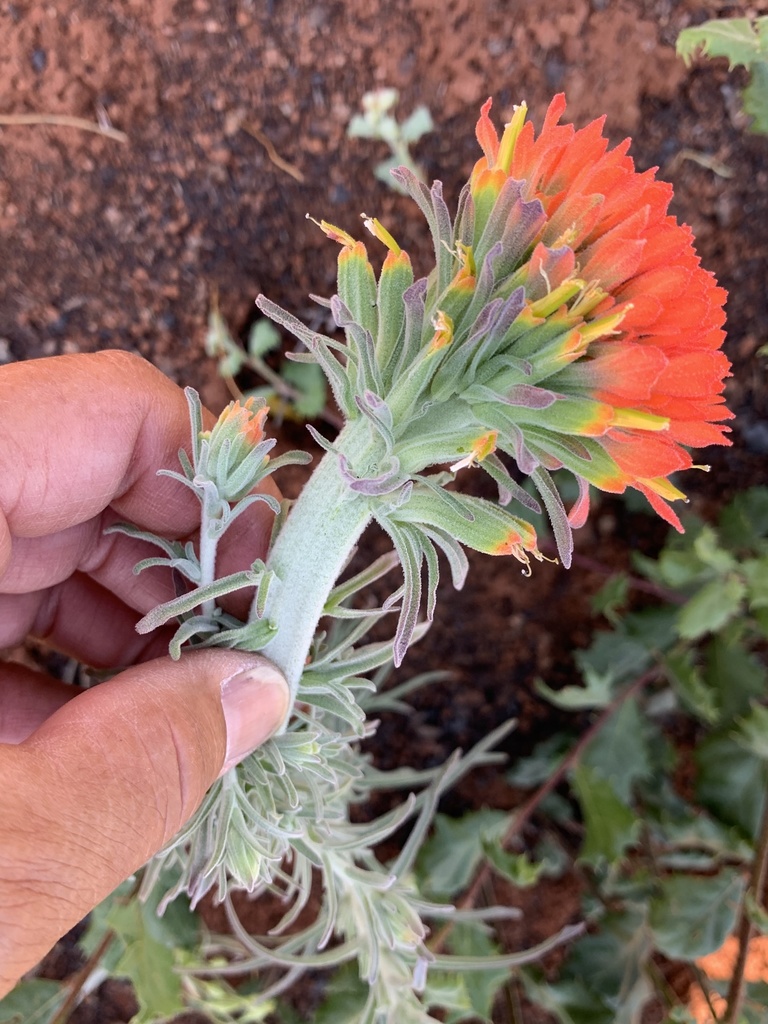
Texas Indian Paintbrush
Castilleja foliolosa
Care
full sun
very low
Fast; .
2–2ft tall , 2–2ft wide
Jan-Dec
Deciduous
Friendly
Prized
Southern California deserts and semi-arid regions, from the Mojave Desert to the Colorado Desert, typically below 3000 ft elevation in desert scrub and washes.
Care Guide
Planting
Plant your Texas Indian Paintbrush in full sun with fast-draining soil - this is non-negotiable, as it's a desert native that rots in wet conditions. The best planting season is fall or winter to establish roots before the dry season. Space it among or near small shrubs like chamise, golden yarrow, or sagebrush, since this plant is semi-parasitic and performs better with host plants nearby. Avoid rich, amended soil; lean, rocky conditions are what it evolved for.
After Planting
Water weekly during your first summer to establish roots, then cut back to once monthly or less once established - after that, rely on rainfall. The #1 mistake Bay Area gardeners make is overwatering out of kindness; this plant wants neglect, not care. Expect it to go dormant or decline in appearance during summer heat, which is completely normal. Don't prune unless you need to remove dead wood; this woolly wildflower looks best left to its own devices.
Visit Calscape for more information about Texas Indian Paintbrush
Endangered & Threatened Species Supported
Federal Threatened; California Endangered; Species of Special Concern
Some subspecies federally protected; species has state endangered designation
California Species of Special Concern
Wildlife Supported
Birds
Year-round nectar source in California; critical winter and early spring resource
Spring migration and breeding season nectar resource
Insects
Larvae feed on plant foliage in spring after host plant emergence
Early spring larval development on tender new foliage
Spring and early summer larval host plant
Spring and early summer nectar foraging for colony provisioning
Fungal pathogen; completes lifecycle on plant
Multiple generations use plant as larval host throughout growing season
Spring and early summer pollen collection